AMH Test: Best Way to Know Your Reproductive Potential
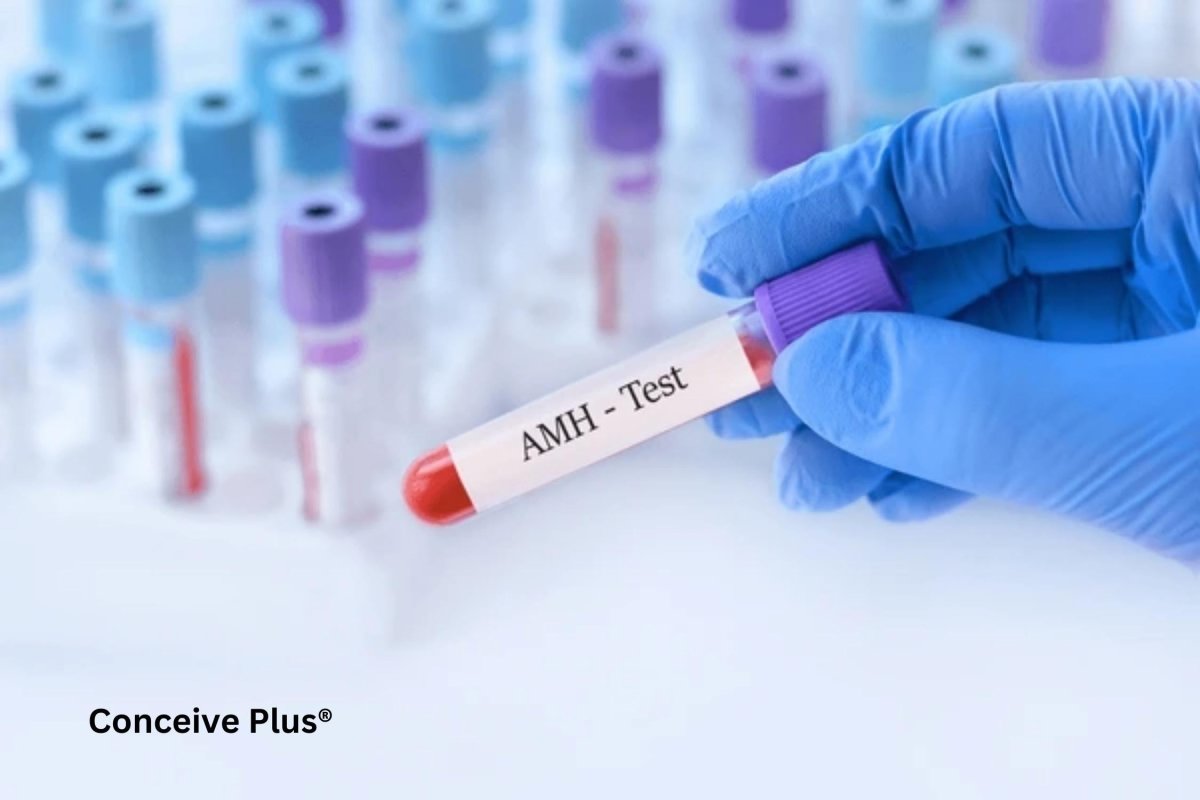

Understanding your AMH levels will allow you timely fertility planning, especially for women considering assisted reproductive technologies like in vitro fertilization (IVF). Let’s understand how this is the best way to know how fertile you are.

What Is AMH?
AMH Anti Mullerian hormone is a protein produced by cells in the ovarian follicles. In males, it plays a role in preventing the development of female reproductive organs during fetal growth. In females, anti mullerian hormone levels indicate the number of eggs left in the ovaries. A higher antimüllerian hormone level suggests a larger ovarian reserve, while lower levels of AMH can indicate fewer eggs remaining.
This hormone is stable throughout most of a woman’s menstrual cycle, which makes the AMH blood test a reliable measure at any point in the month. It is commonly used by fertility specialists to assess a woman's reproductive potential. However, AMH hormone levels do not provide information on the quality of the eggs, just their quantity [1].
AMH Levels and Age
AMH levels naturally decline as a woman ages, which corresponds with the depletion of eggs. Women are born with approximately 1 to 2 million eggs, but this number decreases over time. By the time a woman reaches menopause, her ovarian reserve is nearly exhausted [2].
For a woman in her reproductive years, typical AMH levels range from 1 to 4 ng/mL. These levels decline as women get older. Find out what is AMH level as per your age:
- At age 25: Around 3.0 ng/mL
- At age 35: Around 1.5 ng/mL
- At age 40: Around 1.0 ng/mL
- At age 45: Around 0.5 ng/mL
A low AMH level (below 1.0 ng/mL) may indicate a diminished ovarian reserve, while high AMH levels could suggest conditions like polycystic ovary syndrome (PCOS), where there are more follicles than usual.
What Does the AMH Test Reveal?
The AMH hormone test or antimalarial hormone test can help fertility specialists tailor treatments by providing insights into a woman’s ovarian reserve. While low AMH levels indicate a smaller pool of available eggs, this doesn’t necessarily mean infertility. Women with low AMH levels can still get pregnant, but they may have fewer eggs available for assisted reproductive technologies (ART) like IVF.
On the other hand, high AMH levels might point to PCOS, a hormonal disorder that affects egg release and can complicate conception. AMH normal range is generally anywhere between 1 to 4 ng/mL. This indicates a healthy ovarian reserve for pregnancy [3].
What Can’t the AMH Test Tell You?
It’s crucial to understand that while the AMH test provides valuable information about the number of eggs, it cannot determine their quality or predict when menopause will occur. Egg quality typically declines as a woman ages, and this is a major factor in fertility. Additionally, AMH hormone levels cannot predict how long it will take to conceive or the success of ART treatments.

Why Is the AMH Test Important?
An AMH test is often recommended for women trying to conceive, especially those considering fertility treatments. It can help predict how well the ovaries might respond to stimulation during treatments like IVF. This is particularly important because knowing your AMH hormone levels can guide the fertility approach, such as whether egg freezing or IVF should be considered earlier [4].
Beyond fertility, the AMH lab test is used to assess conditions like:
- Polycystic ovary syndrome (PCOS), where high AMH levels are often detected.
- Premature ovarian insufficiency, where low AMH levels suggest a diminished egg supply at a younger-than-expected age.
- Menopause, where a significant drop in AMH levels can predict its onset.
What Do AMH Levels Mean?

✨ Trying to Conceive?
Our Ovulation & Fertility Bundle combines Myo-Inositol with essential vitamins to support healthy hormone balance and regular ovulation.
Shop Now — $55.00✓ Free shipping on orders over $40 | ✓ Trusted by millions of couples worldwide
The AMH blood test is simple and minimally invasive. A small blood sample is taken from a vein in your arm, and no special preparation is needed. Unlike some other reproductive hormones, AMH levels remain relatively stable throughout the menstrual cycle, so the test can be done at any time.
For those looking for more convenient options, at-home testing kits are available. However, it is advisable to follow up with a fertility specialist who can interpret the results and suggest the best course of action.
Interpreting AMH Test Results
Your AMH test results provide insight into your ovarian reserve but should be interpreted along with other fertility markers, such as follicle-stimulating hormone (FSH) and estradiol levels. Low AMH hormone normal value might suggest diminished ovarian reserve, while high values could indicate conditions like PCOS.
It's essential to consult a fertility specialist for a comprehensive analysis of your results. The AMH hormone test is a helpful tool in understanding your fertility status but doesn't provide a complete picture of your reproductive health.
- Normal AMH levels: 1.0 - 4.0 ng/mL, indicating a healthy ovarian reserve.
- Low AMH levels: Less than 1.0 ng/mL, suggesting diminished ovarian reserve, but not necessarily infertility.
- High AMH levels: Greater than 4.0 ng/mL, which could point to PCOS.
If your AMH test results fall outside the normal range, your healthcare provider will discuss treatment options or lifestyle changes to improve your reproductive health [5].
What Is Low AMH?
A low AMH level suggests that a woman has fewer eggs remaining in her ovaries. This could be a sign of reduced fertility, but it doesn't mean pregnancy is impossible. Anti mullerian hormone low is more common as women age, especially after 35, when AMH levels and age tend to correlate with a decline in ovarian reserve.
Women with low AMH levels may find it more challenging to conceive naturally or through IVF, but there are still treatment options available. It's important to discuss your AMH test results with a fertility specialist, as factors like egg quality and overall health also play a significant role in AMH fertility.
What Is High AMH?
High AMH levels are often associated with PCOS, a condition that can affect ovulation and AMH levels fertility. Women with high anti mullerian hormone may have more eggs available but might face challenges with ovulation regularity. High anti mullerian hormone can also indicate a risk for ovarian hyperstimulation syndrome (OHSS) during fertility treatments, where the ovaries become swollen and painful due to overstimulation.
When AMH Levels Drop Too Low?
AMH levels naturally decline as women age, which is why it's often measured to assess ovarian reserve. For example, the average AMH hormone normal level for a woman in her 20s or early 30s is higher than for a woman in her 40s. As a woman approaches menopause, AMH levels typically drop to nearly undetectable levels.

How Is the AMH Lab Test Done?
The mullerian test is a simple blood test that doesn't require any special preparation. Unlike other reproductive hormones, anti mullerian hormone test remains consistent throughout the menstrual cycle, meaning the test can be done at any time. Once the blood is drawn, the results are usually available within a few days. The test is commonly performed in a doctor’s office or through at-home testing kits.
AMH Levels and Pregnancy
One of the main concerns for women with low AMH levels is whether they can still conceive. While lower AMH may indicate fewer eggs, it does not necessarily mean pregnancy is impossible. Many women with low AMH levels have successfully conceived either naturally or through ART methods like IVF. That said, women with diminished ovarian reserve may need to consider fertility preservation options, such as egg freezing, especially if they are not ready to get pregnant right away.
Monitoring your basal body temperature (BBT) for early pregnancy signs like an implantation dip can complement AMH testing in understanding fertility and conception timing.
AMH Levels and Fertility Treatment
For women undergoing fertility treatment, AMH test results can help in creating a personalized treatment plan. Additionally, incorporating fertility-supporting supplements containing ingredients like CoQ10, Myo-Inositol, and folic acid may help improve ovarian function and support reproductive health. Women with normal or higher AMH levels might respond well to ovarian stimulation, which is crucial for IVF cycles. In contrast, women with low AMH levels may have fewer eggs retrieved during ART procedures, reducing the chances of success.
Even though the AMH hormone normal range helps guide fertility treatments, it should not be viewed as the sole determinant of fertility. AMH levels and age must be considered together, as well as other hormones like follicle-stimulating hormone (FSH) and estradiol [6].
Final Words
The AMH test offers important insights into a woman’s fertility by measuring the antimüllerian hormone levels in her blood. It offers valuable insight into the number of eggs a woman has left. While it provides a picture of ovarian reserve, it is only one piece of the fertility puzzle. A comprehensive fertility assessment, including AMH hormone levels, age, and other reproductive factors, is necessary for a complete understanding of fertility health.
Whether you are planning to conceive soon or in the future, understanding your AMH levels can guide you in making informed decisions about your reproductive health. Always consult with a fertility specialist to interpret your results accurately and determine the best plan for your individual needs.
By considering both AMH hormone normal values and other reproductive factors, you can make the best choices for your fertility journey.
Resources
- MedlinePlus [Internet]. Bethesda (MD): National Library of Medicine (US); [updated 2020 Jun 24]. Anti-Müllerian Hormone Test. Available from: https://medlineplus.gov/lab-tests/anti-mullerian-hormone-test
- Extended Fertility[Internet]. Egg Count- Available from https://extendfertility.com/your-fertility-3/egg-count/
- Moolhuijsen LME, Visser JA. Anti-Müllerian Hormone and Ovarian Reserve: Update on Assessing Ovarian Function. J Clin Endocrinol Metab. 2020 Nov 1;105(11):3361–73. doi: 10.1210/clinem/dgaa513. PMID: 32770239; PMCID: PMC7486884.
- Hou, Y., Wang, L., Li, Y. et al. Serum levels of anti-Müllerian hormone influence pregnancy outcomes associated with gonadotropin-releasing hormone antagonist treatment: a retrospective cohort study. Sci Rep 13, 2127 (2023). https://doi.org/10.1038/s41598-023-28724-8
- Dayal M, Sagar S, Chaurasia A, Singh U. Anti-mullerian hormone: a new marker of ovarian function. J Obstet Gynaecol India. 2014 Apr;64(2):130-3. doi: 10.1007/s13224-013-0482-3. Epub 2013 Dec 3. PMID: 24757342; PMCID: PMC3984648.
- Practice Committee of the American Society for Reproductive Medicine[Internet]. Testing and interpreting measures of ovarian reserve: a committee opinion (2020). Reviewed by ASRM members. Available from- https://www.asrm.org/practice-guidance/practice-committee-documents/testing-and-interpreting-measures-of-ovarian-reserve-a-committee-opinion-2020/
Conceive Plus is the best place to buy myo-inositol online for the best myo-inositol supplements Conceive Plus Ovulation Support contains premium myo-inositol for sale. Order myo-inositol capsules online today to boost your ovulation and regulate hormones and menstrual cycles.
🌱 Support Your Fertility Journey
Conceive Plus fertility supplements are clinically formulated to help regulate your cycle and support egg quality.
Shop Fertility Support →Frequently Asked Questions
Recommended by Fertility Experts
Conceive Plus Men's Fertility Support
Designed to support healthy sperm production, motility, and overall male reproductive health with clinically studied nutrients.
Shop Now →What is considered a normal AMH level for my age?
Normal AMH levels vary by age, typically ranging from 1 to 4 ng/mL for women in their reproductive years. At age 25, normal levels are around 3.0 ng/mL, declining to approximately 1.5 ng/mL at age 35, 1.0 ng/mL at age 40, and 0.5 ng/mL at age 45. Your fertility specialist will interpret your specific results in context with your age and overall health, as there is some variation between individuals and different laboratories may have slightly different reference ranges.
Does AMH test results tell you about egg quality?
No, the AMH test only measures the quantity of remaining eggs, not their quality or chromosomal health. While a higher AMH level indicates more eggs available, it does not guarantee that those eggs are viable or chromosomally normal. For information about egg quality, your fertility specialist may recommend additional testing such as preimplantation genetic testing (PGT) if you pursue IVF or other assisted reproductive technologies.
Can I take the AMH test at any time during my menstrual cycle?
Yes, one of the advantages of the AMH test is that AMH levels remain stable throughout most of your menstrual cycle, making it reliable to test at any point in the month. Unlike other fertility hormones such as FSH or estrogen, which fluctuate significantly during your cycle, you don't need to time your blood draw for a specific day. This convenience makes AMH testing easier to schedule and more flexible for busy patients.
What does a low AMH level mean for fertility?
A low AMH level (below 1.0 ng/mL) may indicate diminished ovarian reserve, meaning you have fewer eggs remaining than expected for your age. However, a low AMH does not mean you cannot conceive naturally, as it's possible to become pregnant with fewer eggs—quality matters as much as quantity. If you have low AMH and are concerned about fertility, discuss your specific situation with a reproductive endocrinologist who can recommend personalized treatment options, such as IVF or other assisted reproductive technologies.
Can high AMH levels affect fertility or pregnancy?
High AMH levels may indicate polycystic ovary syndrome (PCOS), a condition characterized by more ovarian follicles than usual, which can affect fertility by causing irregular ovulation. However, high AMH alone does not prevent pregnancy—many women with elevated levels conceive naturally or successfully with fertility treatment. If your AMH is elevated, your fertility specialist will investigate further to determine if PCOS or another condition is present and recommend appropriate management.
Is the AMH test covered by insurance?
AMH test coverage varies by insurance plan and whether the test is medically necessary based on your clinical situation. Many major US insurance plans cover AMH testing when ordered by a fertility specialist as part of an infertility evaluation, though you may have out-of-pocket costs depending on your plan's deductible and copayment structure. Contact your insurance provider directly or ask your fertility clinic's billing department to verify coverage for your specific plan before testing.
At what age should I consider getting an AMH test?
The American Society for Reproductive Medicine (ASRM) recommends AMH testing for women concerned about their fertility, particularly those over 35 planning to conceive, those with irregular menstrual cycles, or those with a family history of early menopause. If you're under 35 and have no fertility concerns, routine AMH testing is generally not necessary unless you're considering fertility preservation or delayed childbearing. Discuss with your healthcare provider whether AMH testing is appropriate for your individual circumstances and reproductive goals.
Trusted by Couples in Over 70 Countries
Support Male Fertility From the Inside Out
Male fertility is just as important as female fertility in the conception journey. Conceive Plus Men's range delivers targeted nutritional support to promote healthy sperm and overall reproductive wellbeing.
Shop Men's Range →