Can You Get Pregnant With Clothes On or Could It Really Happen?
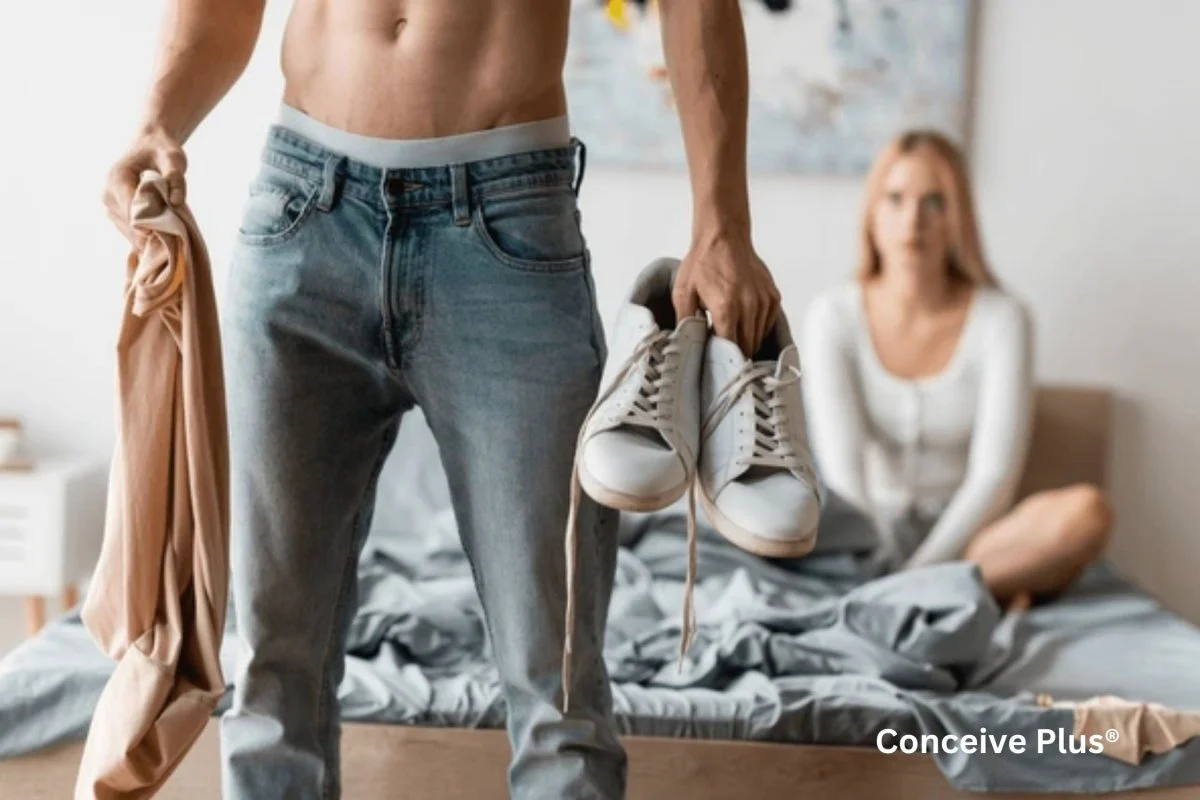

Can you get pregnant with clothes on is one of those questions a lot of people have asked. It’s natural to wonder about it, especially when considering how pregnancy occurs and what factors play a role. The quick answer? It’s highly unlikely. Clothes act as a barrier, making it nearly impossible for sperm to reach the vagina. However, there are a few rare situations—like thin or wet clothing, or if semen comes into contact with the vulva—where the possibility, though slim, isn’t entirely zero. Understanding how pregnancy works, the role of ovulation, and the conditions required for fertilization can help clear up the confusion. Let’s dig into it to explore the science behind it and address common concerns.

How does pregnancy even happen?
For a pregnancy to happen, a few things have to line up just right. First, there’s gotta be ejaculation, because that’s how sperm gets released. Next, that sperm has to make its way into the vagina. Finally, the woman needs to be ovulating. That’s when an egg is ready to be fertilized.
Now, when you’ve got clothes in the way, they act as a pretty solid barrier. This makes it almost impossible for sperm to get where it needs to go. So, no, you’re not likely to get pregnant through clothes.
Still, if you’re trying to conceive, it’s a good idea to take care of your body. Things like Folic Acid and Myo-Inositol can help balance hormones and improve egg quality. These are small but important steps to boost fertility [1].
Can you get pregnant with clothes on?
So, can you get pregnant with clothes on? Honestly, no. The chances are so slim it’s almost a no-brainer. Clothes, especially thicker ones like jeans, create a barrier that sperm just can’t penetrate.
But, there are exceptions. If you’re wearing thin or wet clothing and there’s semen involved, there’s a teeny-tiny chance. Also, if clothes shift or tear and there’s direct skin contact near the vaginal area, that slim chance gets slightly bigger. But even then, it’s super rare.
On another note, if you’re trying to conceive, nutrients like L-Arginine are great for improving blood flow to reproductive organs. This can naturally support your efforts to have a baby [2].
Could you get pregnant with clothes on?
The question could you get pregnant with clothes on isn’t much different. Again, it’s really unlikely, but it depends on the circumstances. For example, pre-ejaculate, also called pre-cum, sometimes contains sperm. If it soaks through thin clothing and gets to the vaginal area, there’s a slight chance of pregnancy.
However, with thick clothing or multiple layers, sperm isn’t getting through. It’s just not happening. Still, if you’re planning for a baby, supplements with Vitamin D and CoQ10 can improve egg and sperm quality, giving you better chances when the time comes [3].
Some also wonder, can you get pregnant from precum, since pre-ejaculate fluid may carry sperm in certain cases, leading to a small but possible risk of pregnancy.

When could pregnancy happen through clothes?
Even though it’s rare, there are a few scenarios where pregnancy could happen through clothes. For one, thin or wet clothing might allow semen to soak through and make contact with the vulva. If clothes shift or there’s a tear during intimacy, it could expose genital areas, increasing the risk a little.
And if semen gets deposited near the vaginal opening, and the woman happens to be ovulating, the chances—though still slim—aren’t zero.
On the flip side, for those trying to get pregnant, nutrients like Zinc and Magnesium can really help. They support healthy sperm development and hormonal balance, which are both crucial for conception [4].
What can you do to improve fertility naturally?
If you’re trying for a baby, there’s plenty you can do to boost your chances naturally. Start by adding Folic Acid to your daily routine. It helps with DNA synthesis and supports the early stages of pregnancy. Zinc is another big one—it’s essential for hormone regulation and healthy sperm.
Meanwhile, Magnesium can help keep your hormones balanced, and Selenium protects your reproductive cells from damage. Adding these nutrients into your diet or through supplements can make a huge difference [5].
Don’t forget lifestyle stuff, too. Eat well. Exercise. Sleep. Stress less (easier said than done, right?). All of it matters when you’re trying to conceive.
If you’re new to the journey of conception, you may also wonder, can you get pregnant from the first time, as first-time pregnancy chances can vary based on numerous factors.

Can pregnancy happen through clothes?
Here’s the bottom line: Pregnancy through clothing is incredibly rare. But, specific situations could make it possible. For example, if both people are wearing very little or thin clothing, there’s a slight risk. If semen comes into contact with the vulva or clothing shifts to expose genital areas, pregnancy could technically happen.
If you’re worried about unintended pregnancy, it’s best to stick to safer options. Use contraception, keep communication open, and make informed choices.
For couples hoping to conceive, supplements with CoQ10 and Omega-3 fatty acids can improve both egg and sperm quality, making it easier to achieve a healthy pregnancy when the time is right [6].
The Bottom Line
So, can you get pregnant with clothes on or could it really happen? The answer is almost always no. Clothes are a solid barrier that sperm can’t usually penetrate. Still, rare scenarios could make it possible under the right (or wrong) conditions.
If you’re trying to conceive, focusing on reproductive health is key. Nutrients like Folic Acid, Zinc, CoQ10, and Vitamin D are game-changers for fertility. A little preparation can go a long way in making your journey to parenthood a smooth one.
FAQs
Can pregnancy happen with both partners fully clothed?
It’s very unlikely. Clothes act as a strong barrier, making it almost impossible for sperm to reach the vagina.
Can pre-ejaculate cause pregnancy during clothed intimacy?
The chances are slim, but pre-ejaculate could contain sperm that, in rare cases, might soak through thin clothing and lead to pregnancy.
What can I do to improve fertility naturally?
Eating a balanced diet, managing stress, and taking nutrients like Folic Acid, Magnesium, and Zinc can help support reproductive health.
Is it possible to reduce the risk of pregnancy during clothed intimacy?
Yes. Wearing thicker clothing, avoiding genital contact, and practicing safe intimacy are effective ways to reduce the risk.
Can signs of pregnancy appear after clothed intimacy?
If pregnancy occurs, you might notice missed periods, nausea, or fatigue. A pregnancy test can help confirm if you’re unsure.
Citations
- Gupta, D., Khan, S., Islam, M., Malik, B. H., & Rutkofsky, I. H. (2020). Myo-Inositol's Role in Assisted Reproductive Technology: Evidence for Improving the Quality of Oocytes and Embryos in Patients With Polycystic Ovary Syndrome. Cureus. Available at: https://pmc.ncbi.nlm.nih.gov/articles/PMC7292722/
- Steegers-Theunissen, R. P., Twigt, J., Pestinger, V., & Sinclair, K. D. (2013). The periconceptional period, reproduction and long-term health of offspring: the importance of one-carbon metabolism. Human reproduction update. Available at: https://pubmed.ncbi.nlm.nih.gov/23959022/
- Bentov, Y., Hannam, T., Jurisicova, A., Esfandiari, N., & Casper, R. F. (2014). Coenzyme Q10 Supplementation and Oocyte Aneuploidy in Women Undergoing IVF-ICSI Treatment. Clinical medicine insights. Reproductive health. Available at: https://pmc.ncbi.nlm.nih.gov/articles/PMC4071761/
- Tremellen K. (2008). Oxidative stress and male infertility--a clinical perspective. Human reproduction update. Available at: https://pubmed.ncbi.nlm.nih.gov/18281241/
- Abou-Shakra, F. R., Ward, N. I., & Everard, D. M. (1989). The role of trace elements in male infertility. Fertility and sterility. Available at: https://pubmed.ncbi.nlm.nih.gov/2753179/
- Middleton, P., Gomersall, J. C., Gould, J. F., Shepherd, E., Olsen, S. F., & Makrides, M. (2018). Omega-3 fatty acid addition during pregnancy. The Cochrane database of systematic reviews. Available at: https://pmc.ncbi.nlm.nih.gov/articles/PMC6516961/
🌱 Explore Conceive Plus
From fertility lubricants to supplements for him and her — discover clinically-tested products trusted by millions of couples worldwide.
Shop All Products →Frequently Asked Questions
Recommended by Fertility Experts
Conceive Plus Men's Fertility Support
Designed to support healthy sperm production, motility, and overall male reproductive health with clinically studied nutrients.
Shop Now →Q: Can I get pregnant through clothes?
A: Pregnancy through clothes is extremely unlikely because sperm cannot penetrate most fabric materials. For pregnancy to occur, sperm must reach the vagina and travel through the cervix to fertilize an egg during the fertile window—typically the 5 days before and day of ovulation. Clothing acts as a physical barrier that blocks this pathway. However, in rare cases involving very thin, wet, or transparent fabrics where semen makes direct contact with the vulva, there is a minimal theoretical risk, though the American Society for Reproductive Medicine (ASRM) confirms this scenario is highly improbable under normal circumstances.
Q: Can sperm travel through underwear?
A: Sperm cannot travel through standard underwear materials like cotton, silk, or synthetic blends. Sperm are microscopic cells that require a moist environment to survive and move, and most fabrics dry quickly while also blocking their passage. According to fertility research, sperm can only survive a few minutes outside the body on dry surfaces. The only scenario where underwear might not provide a complete barrier is if it's extremely wet or permeable, but even then, sperm would need direct contact with the vaginal opening to pose any pregnancy risk.
Q: Can you get pregnant from sperm on the outside with clothes on?
A: Getting pregnant from sperm on the outside of your clothes is virtually impossible due to the protective barrier that clothing provides. Even if semen contacts the exterior of your clothes, sperm cells dry out quickly and cannot penetrate fabric to reach the vagina. The Centers for Disease Control (CDC) and reproductive health professionals confirm that external contact with clothing does not create a viable pregnancy pathway. To achieve pregnancy, sperm must be deposited directly into the vagina during intercourse, ideally during the fertile window when an egg is available for fertilization.
Q: Can making out with clothes on lead to pregnancy?
A: Making out or kissing with clothes on cannot result in pregnancy under any circumstances. Pregnancy requires sperm to reach and fertilize an egg in the fallopian tube, which is impossible through kissing or clothed physical contact. Even if clothing is partially removed during intimate contact, pregnancy can only occur if semen is deposited in or near the vagina. If you're concerned about contraception during sexual activity, the American College of Obstetricians and Gynecologists (ACOG) recommends using FDA-approved contraceptive methods alongside fertility awareness practices to prevent unintended pregnancy.
Q: When trying to conceive, what's the most reliable way to increase pregnancy chances?
A: To maximize your chances of conception, track your ovulation cycle—typically occurring 14 days before your next period—and have intercourse during your 5-day fertile window. According to ASRM, timing intercourse during this window increases pregnancy probability significantly compared to other times of the cycle. Beyond timing, maintaining overall reproductive health through proper nutrition, prenatal vitamins, and fertility supplements like Conceive Plus (which includes key ingredients to support sperm motility and vaginal health) can optimize your fertility. Additionally, reducing stress, maintaining a healthy weight, and limiting alcohol consumption are all evidence-based practices that support conception efforts.
Trusted by Couples in Over 70 Countries
Support Male Fertility From the Inside Out
Male fertility is just as important as female fertility in the conception journey. Conceive Plus Men's range delivers targeted nutritional support to promote healthy sperm and overall reproductive wellbeing.
Shop Men's Range →