Is Having Sex Twice a Day During Ovulation and Daily Sex Good for Pregnancy


When you’re having sex twice a day during ovulation, you might think it’ll double your chances of getting pregnant, right? But is it really necessary? A lot of couples trying to conceive (TTC) want to know how much sex is "enough" and whether daily sex helps. Understanding your pregnancy success rate can provide clarity and help you focus on timing rather than frequency. Let’s break it all down, so you don’t feel like you’re guessing anymore.
Timing Sex During Ovulation Is Key
Pregnancy is an exciting yet sometimes overwhelming journey, with every week bringing new developments for both the baby and the mother. If you're 30 weeks pregnant, you may wonder how much time is left before you finally meet your little one. Let’s break this down based on the standard duration of pregnancy, which is typically 40 weeks, and answer some common questions along the way. Timing is everything when you’re trying to conceive, and ovulation tracking plays a crucial role. Your fertile window lasts about six days—five days before ovulation, ovulation day, and the day after. Why? Because sperm can live in your body for up to five days, but an egg survives only about 12-24 hours after it’s released.
So, the goal isn’t just to have as much sex as possible. It’s about making sure sperm is already there waiting for the egg. That’s why having sex in the days before ovulation gives you the best odds.
But should you have sex multiple times a day during this window? Not really. There’s no solid evidence to suggest having sex twice a day during ovulation improves your chances. Too much ejaculation might actually lower sperm count temporarily for some men [1].
Top Tip: Try focusing on having sex once a day or every other day during the fertile window. Timing matters more than overdoing it!

How Often to Have Sex When TTC
Wondering how often to have sex when TTC? Some couples feel pressure to have sex every day or even multiple times a day. But here’s the thing—having sex every other day during your fertile window is usually enough.
Studies show sperm quality doesn’t improve if you abstain for too long or have sex too frequently. Sperm health is highest when there’s a balance—regular sex every 24-48 hours works best [2].
However, if you both enjoy daily sex and it doesn’t feel like a chore, go for it! Just don’t feel like you have to.
Top Tip: Use tools like ovulation predictor kits or monitor cervical mucus changes to figure out your fertile days. That way, you don’t waste energy guessing when to try.
Is Daily Sex Good for Pregnancy?
A lot of people wonder, is daily sex good for pregnancy? The answer is yes and no. It’s good because it ensures you’re not missing the fertile window, but it’s not mandatory.
Daily sex might not feel sustainable for all couples, especially if it starts to feel like a task instead of something intimate and enjoyable. And let’s be real—if you’re exhausted or stressed, it can do more harm than good.
For most couples, having sex every other day works just as well. It gives sperm time to regenerate while still keeping the chances high [3].
Top Tip: Don’t let the process feel mechanical. Keep it fun and natural. Stress can actually mess with fertility hormones, so relax!
Fertility Boosters That Help
Trying to conceive is about more than just timing intercourse. Your body needs the right nutrients to support fertility. Here are some that can make a difference:

✨ Trying to Conceive?
Our Ovulation & Fertility Bundle combines Myo-Inositol with essential vitamins to support healthy hormone balance and regular ovulation.
Shop Now — $55.00✓ Free shipping on orders over $40 | ✓ Trusted by millions of couples worldwide
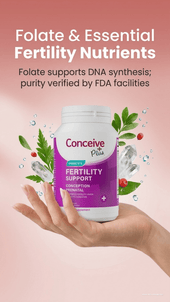
- Folic Acid: This one’s a must. It supports cell growth and prevents neural tube defects in early pregnancy [4].
- Myo-Inositol and D-Chiro Inositol: Help balance hormones and improve egg quality, especially for women with PCOS [5].
- Zinc and Selenium: Boost sperm motility and overall reproductive health [6].
- CoQ10: Protects eggs and sperm from oxidative stress. It also improves energy production at the cellular level [7].
- L-Arginine: Enhances blood flow to reproductive organs, improving fertility for both men and women [8].
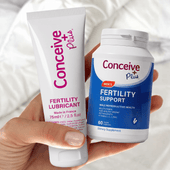
Fertility-friendly lubricants can also help. Look for ones with magnesium and calcium ions. They create a sperm-friendly environment and support fertilization.
Top Tip: Incorporate these nutrients into your daily routine for better fertility outcomes.

The Bottom Line
So, is having sex twice a day during ovulation or daily sex necessary? Not really. Timing your fertile window and maintaining healthy sperm and egg quality is way more important than frequency. Keep stress levels low, enjoy the process, and stay consistent with your efforts.
Remember, it’s not a race—it’s a journey. With the right timing, good health, and patience, your chances of conceiving are high.
FAQs
Does having sex twice a day lower sperm count?
It might temporarily reduce sperm count, but for most healthy men, it won’t make a big difference.
How do I know when I’m ovulating?
You can use ovulation predictor kits, track your basal body temperature, or monitor cervical mucus for changes.
Can I have sex every day when trying to conceive?
Yes, you can. But having sex every other day is just as effective and may feel less stressful.
What nutrients help with fertility?
Folic acid, CoQ10, zinc, and inositol are excellent for supporting reproductive health.
Are all lubricants safe when TTC?
No. Choose fertility-friendly lubricants with magnesium and calcium ions to support sperm health.

Citations
- Miyamoto, T., Tsujimura, A., Miyagawa, Y., Koh, E., Namiki, M., & Sengoku, K. (2012). Male infertility and its causes in human. Advances in urology. Available at: https://pmc.ncbi.nlm.nih.gov/articles/PMC3199180/
- Bonde, J. P., Ernst, E., Jensen, T. K., Hjollund, N. H., Kolstad, H., Henriksen, T. B., Scheike, T., Giwercman, A., Olsen, J., & Skakkebaek, N. E. (1998). Relation between semen quality and fertility: a population-based study of 430 first-pregnancy planners. Lancet (London, England). Available at: https://pubmed.ncbi.nlm.nih.gov/9777833/
- Bungum M. (2012). Sperm DNA integrity assessment: a new tool in diagnosis and treatment of fertility. Obstetrics and gynecology international. Available at: https://pmc.ncbi.nlm.nih.gov/articles/PMC3236416/
- Czeizel, A. E., & Dudás, I. (1992). Prevention of the first occurrence of neural-tube defects by periconceptional vitamin supplementation. The New England journal of medicine. Available at: https://pubmed.ncbi.nlm.nih.gov/1307234/
- Unfer, V., Facchinetti, F., Orrù, B., Giordani, B., & Nestler, J. (2017). Myo-inositol effects in women with PCOS: a meta-analysis of randomized controlled trials. Endocrine connections. Available at: https://pmc.ncbi.nlm.nih.gov/articles/PMC5655679/
- Allouche-Fitoussi, D., & Breitbart, H. (2020). The Role of Zinc in Male Fertility. International journal of molecular sciences. Available at: https://pmc.ncbi.nlm.nih.gov/articles/PMC7589359/
- Bentov, Y., Hannam, T., Jurisicova, A., Esfandiari, N., & Casper, R. F. (2014). Coenzyme Q10 Supplementation and Oocyte Aneuploidy in Women Undergoing IVF-ICSI Treatment. Clinical medicine insights. Reproductive health. Available at: https://pubmed.ncbi.nlm.nih.gov/24987272/
- Gao, K., Jiang, Z., Lin, Y., Zheng, C., Zhou, G., Chen, F., Yang, L., & Wu, G. (2012). Dietary L-arginine supplementation enhances placental growth and reproductive performance in sows. Amino acids. Available at: https://pubmed.ncbi.nlm.nih.gov/21691753/
🌱 Support Your Fertility Journey
Conceive Plus fertility supplements are clinically formulated to help regulate your cycle and support egg quality.
Shop Fertility Support →Frequently Asked Questions
Recommended by Fertility Experts
Conceive Plus Men's Fertility Support
Designed to support healthy sperm production, motility, and overall male reproductive health with clinically studied nutrients.
Shop Now →Q: How many times a day should you have sex to get pregnant?
A: According to the American Society for Reproductive Medicine (ASRM), having sex every other day during your fertile window is just as effective as daily intercourse for conceiving. Research shows that timing is more important than frequency—targeting the five days before ovulation and the day of ovulation itself provides optimal pregnancy chances. Most fertility experts recommend aiming for sex every 1-2 days throughout your cycle rather than obsessing over daily frequency, as this approach maintains sperm count while reducing stress and pressure on couples trying to conceive.
Q: Is it bad to have sex twice a day when trying to get pregnant?
A: Having sex twice daily during ovulation is not harmful, but it may not significantly increase pregnancy odds compared to once-daily or every-other-day intercourse. Studies indicate that sperm count can deplete with frequent ejaculation, potentially reducing motility if a man ejaculates more than once within a 12-hour period. For couples concerned about sperm quality, spacing intercourse 24-48 hours apart during your fertile window is typically recommended by fertility specialists, though having sex twice daily occasionally won't prevent conception if sperm parameters are healthy.
Q: Does daily sex increase chances of pregnancy?
A: Daily sex during your fertile window provides a conception rate of approximately 37% per cycle, which is comparable to having sex every other day at 33%, according to fertility research. The key advantage of daily intercourse is that it doesn't require precise ovulation timing, making it practical for couples who find it difficult to predict their exact ovulation day. However, for men with lower sperm counts or motility issues, every-other-day intercourse may be preferable to maintain optimal sperm parameters—this is where supplements like Conceive Plus for Men, which support sperm health, can help maximize fertility potential.
Q: What days should you have sex to get pregnant fastest?
A: The most fertile window occurs during the five days leading up to ovulation and the day of ovulation itself, with peak fertility on ovulation day and the two days immediately before. The American College of Obstetricians and Gynecologists (ACOG) recommends having intercourse during this six-day window to maximize pregnancy chances, as sperm can survive for up to five days in the female reproductive tract. You can track ovulation using ovulation predictor kits, basal body temperature, or fertility apps—and while you're optimizing timing, ensuring both partners' reproductive health through proper nutrition and supplements like Conceive Plus can further support conception success.
Q: How long does it take to get pregnant if you have sex every day?
A: Approximately 85% of couples having regular intercourse (including daily) will conceive within one year, with about 90% conceiving within two years, according to US fertility statistics. The time to pregnancy depends more on age, overall health, sperm quality, and ovulation regularity than on daily intercourse frequency alone. If you're under 35 and have been having regular unprotected sex for one year without conceiving, or over 35 and without conceiving after six months, the American Fertility Association recommends consulting a reproductive endocrinologist to rule out underlying fertility issues.
Trusted by Couples in Over 70 Countries
Support Male Fertility From the Inside Out
Male fertility is just as important as female fertility in the conception journey. Conceive Plus Men's range delivers targeted nutritional support to promote healthy sperm and overall reproductive wellbeing.
Shop Men's Range →