How does stress lead to infertility?


Experiments on animals showed that there is a direct relationship between stress and fertility. Scientists stressed mice by limiting their access to food which resulted in a decrease in their fertility rates. Of course, ethically speaking, demonstrating the same thing on humans wouldn't be possible. However researchers from the Ohio University managed to prove that women trying to get pregnant and who already have a high level of stress-related hormones are twice less fertile.
The psycho-social pressures of trying to conceive
Fertility treatments do not help climbing stress levels. Women experiencing infertility and treatments show the same level of anxiety and depression as women having cancer or other serious illnesses.
Psychologically it is very difficult for couples that are having difficulties to conceive. As it happens they are usually surrounded by other couples talking about their own babies or pregnancies, contemplating baby/job related issues and so on... not to mention the fact that fertility treatments are not often supported by insurance companies and result in major financial investments.

✨ Trying to Conceive?
Our Ovulation & Fertility Bundle combines Myo-Inositol with essential vitamins to support healthy hormone balance and regular ovulation.
Shop Now — $55.00✓ Free shipping on orders over $40 | ✓ Trusted by millions of couples worldwide
Don’t underestimate stress and depression!
Stress and depression are among the top factors that strongly affect fertility. Still there are numerous exercises and techniques that can help - women that are learning stress reduction skills, such as yoga for example, have higher pregnancy rates.
Can Acupuncture Improve Fertility?
Another approach to reduce stress is by getting more social support. For example, connecting with other women who are in the same situation by joining forums, groups, writing and engaging in blogs, and other interactive ways.
So if you are trying to conceive keep in mind that having a relaxed and peaceful mind is decisive. Most importantly don’t forget that being the fruit of love, making a baby should be fun and memorable experience for both of you. So having fun in the process is not just recommended-it’s MANDATORY.
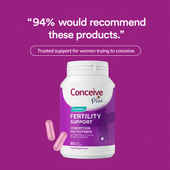
We are here to help you naturally speed up the process of conceiving… but also ensuring that you have the maximum amount of pleasure with Conceive Plus. His and Her Fertility Support can take some of the pressure off and ensure you are giving your body the nutrients it needs to conceive.
🌱 Support Your Fertility Journey
Conceive Plus fertility supplements are clinically formulated to help regulate your cycle and support egg quality.
Shop Fertility Support →Frequently Asked Questions
Recommended by Fertility Experts
Conceive Plus Men's Fertility Support
Designed to support healthy sperm production, motility, and overall male reproductive health with clinically studied nutrients.
Shop Now →What hormones does stress produce that affect fertility?
Stress triggers the release of cortisol and adrenaline, which can suppress reproductive hormones like GnRH (gonadotropin-releasing hormone) and disrupt the delicate hormonal balance needed for ovulation and conception. According to research from Ohio University, women with elevated stress-related hormones show significantly reduced fertility rates. These hormonal disruptions can affect both egg quality and the menstrual cycle regularity required for successful conception.
Does stress affect male fertility as well as female fertility?
Yes, stress impacts both male and female fertility, though the research is more extensively documented in women. In men, chronic stress can reduce sperm quality, lower testosterone levels, and affect sexual function—all factors that influence fertility outcomes. Couples trying to conceive should recognize that stress reduction benefits both partners' reproductive health.
What stress-reduction techniques have scientific evidence for improving fertility?
Yoga, mindfulness meditation, and acupuncture have shown promising results in fertility studies, with women practicing stress reduction techniques demonstrating higher pregnancy rates. Additionally, cognitive behavioral therapy and support groups connecting women with others undergoing similar fertility challenges have proven effective in reducing anxiety and depression related to infertility treatment. The American Society for Reproductive Medicine (ASRM) recognizes the importance of mental health support alongside medical fertility treatments.
Is infertility-related depression covered by insurance in the United States?
Mental health coverage for infertility-related depression varies significantly by insurance plan and state, as fertility treatments themselves are often not fully covered by insurance. Many couples face substantial out-of-pocket costs for both fertility treatments and mental health counseling, which can compound financial stress during the conception journey. It's important to review your specific plan and consult with your insurance provider about coverage for mental health services related to infertility.
How long does it take to see fertility improvements after reducing stress?
Whil
Can stress cause permanent infertility or is it reversible?
Stress-related infertility is generally reversible; once stress levels decrease and hormonal balance is restored, fertility typically improves. However, chronic, unmanaged stress can delay conception and may require professional intervention including therapy, medical treatment, or a combination of approaches. If you've experienced prolonged infertility, consulting with both a fertility specialist and mental health professional can help address both the physical and psychological components.
Should I join a fertility support group or seek individual therapy for infertility stress?
Both approaches have value, and many people benefit from combining them—support groups provide community and shared experiences, while individual therapy offers personalized coping strategies. Research cited in fertility literature shows that increased social support from others experiencing infertility can significantly reduce anxiety and depression. The best choice depends on your personal preferences, but discussing mental health options with your fertility clinic or doctor can help you find the right fit for your situation.
Trusted by Couples in Over 70 Countries
Support Male Fertility From the Inside Out
Male fertility is just as important as female fertility in the conception journey. Conceive Plus Men's range delivers targeted nutritional support to promote healthy sperm and overall reproductive wellbeing.
Shop Men's Range →