Lubricant Effects on Sperm: What Every TTC Couple Must Know Before the Bedroom


Lubricant Effects on Sperm: What Every TTC Couple Must Know Before the Bedroom
If you are trying to conceive and reaching for a bottle of regular lubricant to make intimacy more comfortable, you may be unknowingly sabotaging your own chances. The lubricant effects on sperm are real, scientifically documented, and significant enough that fertility specialists worldwide now address them in first consultations. Understanding what happens at the microscopic level—and what you can do about it—could make a genuine difference in your conception timeline.
In this comprehensive guide, we break down the research on how standard lubricants damage sperm, what the science says about the mechanisms involved, and why switching to a fertility-optimised product like Conceive Plus is one of the most straightforward—and overlooked—changes a TTC couple can make.
Ready to protect your sperm from lubricant damage?
The Hidden Problem: Most Lubricants Were Never Designed With Sperm in Mind
Personal lubricants are formulated primarily for comfort and sensation. Manufacturers optimise for texture, slipperiness, and feel—not for whether their product will allow sperm to survive the journey to an egg. The result is a category of products that, while perfectly safe for general use, can be devastating to sperm function when you are actively trying to conceive.
The lubricant effects on sperm first gained serious scientific attention in the early 2000s, when fertility researchers began investigating why some couples with seemingly healthy sperm parameters were still struggling to conceive. One emerging variable: the use of over-the-counter lubricants during the fertile window.
A landmark 2004 study published in Fertility and Sterility found that common lubricants—including KY Jelly, Astroglide, and olive oil—significantly reduced sperm motility within just 30 minutes of exposure. The reductions were not marginal. In some cases, sperm motility dropped by 60% to 90% compared to controls. This was not a laboratory artefact. These were the same lubricants sitting in millions of bedside tables across America.
Lubricant Effects on Sperm: The Three Key Mechanisms of Damage
Understanding precisely how lubricants harm sperm helps clarify why the chemistry of your chosen product matters so much. There are three primary mechanisms at work:
1. pH Toxicity
Sperm thrive in a very specific pH range—approximately 7.2 to 8.0—which mirrors the environment of fertile cervical mucus. When the pH drops below this range, sperm membranes are damaged, enzymatic activity in the sperm tail is disrupted, and progressive forward motility collapses. Many commercial lubricants have a pH of 4.0 to 5.5, calibrated to match normal vaginal pH for general use. For conception attempts, this is precisely the wrong range. The acidic environment essentially creates a hostile gauntlet that sperm must run through before they ever reach the cervix.
2. Osmolality Mismatch
Osmolality describes the concentration of dissolved particles in a fluid. Sperm are extremely sensitive to osmolality. When exposed to a fluid that is too dilute (hypo-osmolar) or too concentrated (hyperosmolar) relative to their internal environment, sperm experience osmotic stress—essentially either swelling or shrivelling at a cellular level. This damages their DNA and disrupts the energy production mechanisms that power the flagellar whip driving forward movement. Most commercial lubricants are formulated at osmolality levels incompatible with sperm survival.
3. Chemical Ingredient Toxicity
Beyond pH and osmolality, many lubricants contain ingredients that are directly toxic to sperm cells. Glycerol (glycerin), parabens, chlorhexidine, benzalkonium chloride, and certain preservatives have all been shown to damage sperm membranes or inhibit motility. These are standard cosmetic and personal care ingredients—harmless for non-reproductive use—but they interact disastrously with sperm biology when you are trying to conceive.
What the Clinical Research Actually Shows
The scientific literature on lubricant effects on sperm has grown substantially over the past two decades. Here is a summary of key findings:
- Anderson et al. (2004): KY Jelly reduced sperm motility by 60.4% and Astroglide by 64.5% compared to controls. Even saline solution reduced motility by 40%, underscoring that any non-physiological fluid can cause harm.
- Sandhu et al. (2014): A prospective study tracking 296 couples found that lubricant use during the fertile window was associated with a statistically significant reduction in monthly fecundity rates—the probability of conceiving in any given cycle.
- Kutteh et al. (1996): One of the first studies to document the sperm toxicity of commercially available lubricants, showing that certain products reduced sperm forward progression by up to 80% within an hour.
- WHO Laboratory Manual (6th Edition): The World Health Organization explicitly warns against the use of sperm-toxic lubricants during fertility-focused intercourse, and defines the pH and osmolality parameters that fertility-safe lubricants should meet.
These are not fringe findings. The consensus among reproductive specialists is clear: standard lubricants and trying to conceive do not mix.
The Conceive Plus vs Pre-Seed Comparison: Which Fertility Lubricant Actually Delivers?
Once couples understand the danger of regular lubricants, they typically begin researching fertility-safe alternatives. The two most commonly considered options are Conceive Plus and Pre-Seed. Both are marketed as sperm-friendly, but their formulations differ in one critically important way.
Pre-Seed was among the first fertility lubricants on the market and does address the pH and osmolality concerns. It remains a better option than a standard lubricant. However, it lacks one key innovation.
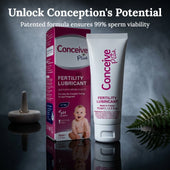
Conceive Plus takes the science a step further by incorporating calcium (Ca²⁺) and magnesium (Mg²⁺) ions directly into its formula. This is not a marketing gimmick—it reflects a genuine scientific insight. Research has demonstrated that these divalent cations play an active role in sperm capacitation (the process by which sperm gain the ability to fertilise an egg) and in the hyperactivation that helps sperm penetrate the egg. Fertile cervical mucus naturally contains calcium and magnesium ions. By replicating this ionic environment, Conceive Plus goes beyond simply "not harming" sperm—it actively supports sperm function.
Key Conceive Plus credentials:
- ✅ FDA-cleared as a medical device for use while trying to conceive
- ✅ Matches fertile cervical mucus in pH (7.2–8.2) and osmolality
- ✅ Formulated with Ca²⁺ and Mg²⁺ ions to support capacitation
- ✅ Clinically studied and used in IVF and IUI clinic settings
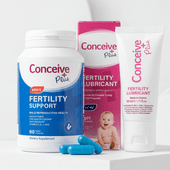
- ✅ Available as individual-use pre-filled applicators and multi-use tubes
- ✅ Free from glycerol, parabens, and other sperm-toxic ingredients
How Regular Lubricants Affect IUI and IVF Cycles
The lubricant effects on sperm are not limited to natural conception attempts. Couples undergoing assisted reproduction procedures need to be equally vigilant. During intrauterine insemination (IUI), sperm are placed directly into the uterus, bypassing the vaginal environment—but lubricant residue from the lead-up to egg retrieval or sample collection can still compromise sample quality.
For IVF cycles, sperm used in fertilisation are typically washed and prepared in the laboratory, but the quality of the initial sample matters for the number of viable, motile sperm available. A sample impacted by lubricant exposure may result in fewer high-quality sperm being available for fertilisation or ICSI (intracytoplasmic sperm injection).
Many fertility clinics now specifically recommend Conceive Plus or instruct patients to avoid all lubricants other than approved fertility-safe options in the weeks leading up to a procedure. If your clinic has not yet mentioned this, it is worth raising at your next appointment.
The Cervical Mucus Comparison: Why Native Conditions Matter
To appreciate why some lubricants protect sperm while others destroy them, it helps to understand what cervical mucus actually does during the fertile window. Around ovulation, estrogen causes cervical mucus to shift from a thick, acidic, inhospitable consistency to a thin, alkaline, sperm-welcoming fluid often described as resembling raw egg whites.
This natural fertile mucus serves multiple functions:
- It provides the correct pH (approximately 7.4) to protect sperm from vaginal acidity
- It offers the right osmolality to maintain sperm cellular integrity
- It creates channels that align with the swimming direction of motile sperm
- It filters out poor-quality or immotile sperm
- It provides nutritional support and ionic signalling (including calcium and magnesium) for sperm capacitation
A fertility-safe lubricant attempts to replicate as many of these properties as possible. Standard lubricants replicate none of them. The lubricant effects on sperm are essentially the consequence of placing sperm in an environment that is the opposite of what they evolved to thrive in.
Who Is Most Vulnerable to Lubricant-Induced Sperm Damage?
While lubricant toxicity is a concern for all TTC couples, certain groups face amplified risk:
Couples with Borderline Sperm Parameters
If sperm count, motility, or morphology is already at the lower end of the normal range, any additional stressor—including lubricant exposure—can be enough to tip the balance toward failure to fertilise. Men with moderate oligospermia (low count) or asthenospermia (low motility) have the most to lose from regular lubricant use during the fertile window.
Women with Low Natural Cervical Mucus
Some women produce insufficient cervical mucus around ovulation, whether due to age, hormonal factors, or prior cervical procedures. These women are more likely to reach for lubricant to facilitate intercourse during the fertile window—and are therefore at elevated risk of harming the sperm that would otherwise benefit from their cervical mucus environment. For this group, a Conceive Plus switch is particularly important.
Couples Who Have Been Trying for 6+ Months
At this stage, every possible variable deserves scrutiny. Lubricant use is one of the most easily eliminated obstacles to conception, yet it is frequently not discussed by GPs or even fertility specialists unless the patient raises it.
Practical Steps: How to Use Conceive Plus Correctly
Simply switching from a regular to a fertility lubricant dramatically reduces lubricant effects on sperm—but using Conceive Plus correctly maximises its benefit:
- Time it right: Use Conceive Plus only during your fertile window (the 5 days before ovulation and ovulation day itself). Track your cycle with an ovulation predictor kit or basal body temperature charting.
- Use applicators for internal application: The pre-filled applicator delivers Conceive Plus directly to the cervical os, where it can create an ideal environment for incoming sperm. This mimics fertile cervical mucus most closely.
- Apply before intercourse: Insert the lubricant before, not during, intercourse to allow it to distribute evenly.
- Use the right amount: Applicators are pre-filled with the optimal volume (4 ml). If using the tube, use 2–5 ml internally.
- Do not rinse: Allow the product to remain in place after intercourse. Do not douche or wash internally afterward.
Give your sperm the environment they deserve.
Shop Conceive Plus Fertility Lubricants — FDA-Cleared & Clinically Studied →
Frequently Asked Questions: Lubricant Effects on Sperm
Q: Does all lubricant kill sperm?
Not all lubricants are equally harmful, but most standard personal lubricants do significantly reduce sperm motility due to pH mismatch, osmolality issues, or chemical ingredients. Fertility-safe lubricants like Conceive Plus are specifically formulated to avoid these problems. The lubricant effects on sperm vary by product, but the safest approach while TTC is to use only clinically validated fertility lubricants.
Q: How quickly does lubricant damage sperm?
Studies show that sperm motility can begin to decline within 5–15 minutes of exposure to incompatible lubricants. By 30 minutes, motility reductions of 60–90% have been documented. This is why it is important to avoid regular lubricants during any fertile-window intercourse—even partial or brief exposure matters.
Q: Can lubricant use prevent pregnancy entirely?
Lubricant is not a reliable contraceptive, and it does not prevent pregnancy with certainty. However, it can meaningfully reduce the probability of conception in any given cycle by impairing sperm motility, potentially increasing the number of cycles needed to achieve pregnancy.
Q: Is Conceive Plus safe to use every cycle?
Yes. Conceive Plus is an FDA-cleared medical device with an established safety profile. It is designed for use whenever couples are trying to conceive and is appropriate for long-term use throughout the TTC journey. There are no known adverse effects from regular use.
Q: What about coconut oil as a natural lubricant for TTC?
Coconut oil is often recommended as a "natural" alternative, but research has demonstrated it too is toxic to sperm—significantly reducing motility in vitro. Natural does not mean fertility-safe. The lubricant effects on sperm from coconut oil are comparable to many water-based commercial lubricants. Stick to clinically validated fertility lubricants.
Q: Does saliva affect sperm the same way lubricant does?
Yes. Saliva is highly toxic to sperm due to its low pH, enzymes, and bacteria. Studies show that even small amounts of saliva can reduce sperm motility by 50–90%. Avoid using saliva as a lubricant when trying to conceive.
Q: Does Conceive Plus work for men with low sperm motility?
Conceive Plus is not a treatment for low motility—it does not increase sperm count or change the baseline sperm parameters. However, it protects the sperm a man does have from the additional damage caused by incompatible lubricants. For men with borderline motility, this protection is especially valuable. Pair it with evidence-based motility supplements for a comprehensive approach.
Q: Is Conceive Plus better than Pre-Seed?
Both are sperm-safe, but Conceive Plus includes calcium and magnesium ions that actively support the capacitation process—steps that prepare sperm to fertilise an egg. Pre-Seed does not include these ions. For couples who want a lubricant that does more than simply avoid harm, Conceive Plus offers a meaningful clinical advantage.
Q: Can I use a regular lubricant if I use it only a small amount?
The research does not suggest a completely safe threshold for regular lubricant exposure—even small amounts can cause significant motility reduction. When trying to conceive, there is no benefit to using a standard lubricant over a fertility-safe one, and the risk is real. The switch to Conceive Plus is simple, inexpensive, and potentially meaningful.
Q: Should I tell my fertility doctor I've been using regular lubricant?
Yes, absolutely. Your fertility team should know all the variables in your conception attempts. Some couples have been using sperm-toxic lubricants for months or even years while undergoing fertility workups, without realising it as a contributing factor. Eliminating this variable is easy and should be done immediately.
Summary: The Takeaway on Lubricant Effects on Sperm
The research is unambiguous. Most personal lubricants—including beloved household names—reduce sperm motility by 60% or more due to incompatible pH, osmolality, and chemical ingredients. For couples trying to conceive, this is a completely avoidable obstacle. The lubricant effects on sperm from standard products represent a silent, overlooked factor in unexplained subfertility for many couples.
The solution is straightforward: replace any regular lubricant with a clinically validated fertility lubricant during your fertile window. Conceive Plus is FDA-cleared, formulated to match fertile cervical mucus in pH and osmolality, and uniquely enriched with calcium and magnesium ions that support sperm capacitation—the biological steps sperm must complete to fertilise an egg. It is used in fertility clinics, recommended by reproductive specialists, and trusted by hundreds of thousands of couples worldwide.
If you are currently using—or have been using—a standard lubricant while trying to conceive, the single most impactful change you can make today costs less than the price of a takeout dinner.
Explore Conceive Plus Fertility Lubricants at conceiveplus.com →
Trusted by hundreds of thousands of couples worldwide.