Mens Prenatal Supplements: Improving Fertility For Conception

When we think about prenatal vitamins, we usually associate them with women preparing for pregnancy. These supplements contain nutrients that support female fertility during pregnancy [1].
However, there is increasing interest in understanding whether men can take prenatal vitamins and if there are benefits of male prenatal vitamins specifically designed to support men’s reproductive health.
In this article, we will explore the concept of men prenatal vitamins, covering topics such as the benefits, risks, and the general need for mens prenatal or preconception vitamins.

What Are Prenatal Vitamins?
Prenatal vitamins are supplements designed to prepare women’s bodies for pregnancy. These vitamins typically contain a combination of nutrients that support fetal development, including folic acid, iron, calcium, DHA (a type of omega-3 fatty acid), and other essential vitamins and minerals [2].
During pregnancy, the nutritional demands of pregnant mothers increase. Sometimes even a balanced diet won’t fill many nutritional gaps [3]. The role of prenatal vitamins is to fill those nutritional gaps in the diet of pregnant mothers. These nutrients support women’s health and the health of the developing baby.
But what about prenatal vitamins for men? Can guys take prenatal vitamins? Can men take prenatal vitamins, and do they offer any specific benefits?
Can Men Take Prenatal Vitamins?
The short answer to can male take prenatal vitamins is yes. But if we go in depth about prenatal vitamins, we get to know that these vitamins don't suit men's nutritional demands [4]. Women require certain nutrients that men don’t need in excess but taking those nutrients in prenatal vitamins can result in side effects.
However, male-specific prenatal vitamins or mens preconception vitamins are also available to improve male fertility. These are called fertility vitamins and are designed to meet the unique nutritional requirements men have when trying to conceive [5]. This type of men’s prenatal supplement can help support sperm health and improve the chances of conception.
What Happens if a Man Takes Prenatal Vitamins?
Since prenatal vitamins contain a range of nutrients, the overall effect of prenatal vitamins on men is complex. Most of the vitamins and minerals in prenatal vitamins for women will still benefit men without significant side effects.
Here are some common nutrients in prenatal vitamins and an explanation on what happens if man takes prenatal vitamins or can a man take a prenatal vitamin:
- Vitamin D: Supports bone development and immune functioning
- Folic Acid (B12): Supports healthy sperm production and may improve sperm quality, which is important for conception [6].
- Zinc: Studies show that zinc is essential for testosterone production and helps maintain healthy sperm, boosting fertility [7].
- Antioxidants (like Vitamin C and E): Protect sperm cells from the damage of oxidative stress, enhancing overall sperm health and motility.
- Calcium: Important for bone formation, muscle function, and metabolism.
- Omega-3 fatty acids: Important for brain health and can help reduce inflammation in the body.
However, taking high doses of certain vitamins, such as iron, without a specific need could lead to excess iron accumulation and iron toxicity. You may experience symptoms such as digestive issues or other health problems.
So, should men take prenatal vitamins? Or, can man take prenatal vitamins?
This is why avoiding prenatal vitamins for females and taking male prenatal vitamins or male fertility vitamins may be a better choice, as they avoid unnecessary nutrients.

Nutrients Beneficial for Male Fertility
Male fertility functions best when essential vitamins and minerals are available to support many fertility related functions in the body.
Here are some beneficial nutrients and how they support male fertility:
1. Zinc

✨ Start Your Prenatal Care Today
Our Prenatal Vitamins with DHA, Choline & Folate provide the essential nutrients you and your baby need for a healthy start.
Shop Now — $34.95✓ Free shipping on orders over $40 | ✓ Trusted by millions of couples worldwide
Zinc is among the most important nutrients for male reproductive health. It plays a significant role in sperm production and testosterone levels. Male prenatal vitamins often include zinc as it helps with cell division and DNA synthesis, supporting healthy sperm development.
Studies show that men who are low in zinc may experience low sperm count, poor sperm motility and overall poor sperm health [7]. These sperm parameters can negatively affect male fertility.
2. Folic Acid
Folic acid is a major ingredient in women’s prenatal vitamins and is also beneficial for men. Studies suggest that folic acid may improve sperm count and quality, reducing the likelihood of abnormalities in the sperm DNA [6].
Men’s fertility vitamins often include folic acid to enhance fertility health and increase chances of conception.
3. Antioxidants
Antioxidants like vitamin C and vitamin E can help protect sperm cells from oxidative stress. Men’s prenatal vitamins frequently include these antioxidants, as they may improve sperm motility and reduce DNA fragmentation, contributing to healthier sperm overall.
4. Vitamin D
Vitamin D supports reproductive health in both men and women. For men, adequate vitamin D levels may contribute to better sperm motility, which is essential for conception. Vitamin D is included in both fertility vitamins for men and general multivitamins to improve reproductive functioning and overall health.
5. Coenzyme Q10 (CoQ10)
CoQ10 is essential for cellular energy production and acts as an antioxidant. Research has shown that CoQ10 supplementation may improve sperm motility and reduce oxidative stress [8]. Many prenatal pills for men include CoQ10 to improve men’s chances for conception.
Additionally, certain herbs for fertility over 40 can complement male prenatal vitamins, offering extra support for men aiming to improve their reproductive health.

Men’s Prenatal Supplements vs. Regular Prenatal Vitamins
Men taking prenatal vitamins may find that certain nutrients in regular prenatal vitamins are unnecessary for them. Nutrients like calcium and iron, while crucial for pregnant women, are generally not required in such high amounts for men.
Male prenatal vitamins are formulated to include nutrients that specifically support male fertility, which may include fewer vitamins that men don’t need in high doses. Male prenatal vitamins or men’s preconception vitamins typically focus on antioxidants, zinc, folic acid, and CoQ10.
Why Consider Male Prenatal Vitamins?
To thoroughly understand why prenatals exist, you need to first understand what happens if a man takes prenatals. Choosing a prenatal for men or a specific male prenatal supplement can be a proactive way to support reproductive health. Men’s prenatal vitamins can help improve sperm quality, which in turn may increase the chances of conception.
Just as women take prenatal vitamins to prepare for pregnancy, male prenatal supplements serve a similar purpose, offering nutritional support to increase the chances of conception.
Common Questions: What Happens if Guys Take Prenatal Vitamins?
Here are some common question that may have come across when searching what happens if a guy takes prenatal vitamins:
-
Can a Guy Take Prenatal Vitamins?
Yes, a guy can take prenatal vitamins, but a male-specific prenatal may be a better option to avoid nutrients that aren’t necessary for him. So next time when you have a thought, can a man take prenatal vitamins, make sure to remember prenatal supplements specifically designed for men.
-
Are Prenatal Vitamins Good for Males?
While they are generally safe, prenatal vitamins designed for women may contain nutrients in higher amounts than necessary for men. Male prenatal vitamins are formulated to match men’s nutritional needs for reproductive health.
-
Should guys take prenatal vitamins?
A guy should take mens prenatal supplements that are specifically designed for improving sperm health and overall reproductive functioning if he is concerned about his fertility.
-
What Happens if a Man Takes Prenatal Pills?
If a man takes prenatal vitamins, he will likely benefit from the nutrients they provide. However, excessive amounts of certain vitamins (like iron) that aren’t necessary for men may cause digestive issues or other health concerns over time.
-
Can Men Take Prenatal Gummies?
Yes, men can take mens prenatal gummies, but checking the nutrient profile is important. Prenatal vitamins for men often come in gummy forms too, specifically formulated for male fertility needs.
The Bottom Line
Women’s prenatal supplements aren’t significantly beneficial for men, instead, they can cause some side effects. This is why men should prefer taking male prenatal vitamins or men’s preconception vitamins which are specially formulated to support male fertility health.
The explanation to can men take prenatals is that mens prenatal vitamins help improve sperm health, supporting the journey toward conception. Nutrients like zinc, folic acid, CoQ10, or antioxidants can help improve sperm quality, motility, and overall fertility.
If you and your partner are trying to conceive, male prenatal vitamins are a smart choice for men looking to support their reproductive health.
Resources Used
- editor. (2024b, May 1). Prenatal Vitamins. American Pregnancy Association. https://americanpregnancy.org/healthy-pregnancy/pregnancy-health-wellness/prenatal-vitamins/
- Marshall, N. E., Abrams, B., Barbour, L. A., Catalano, P., Christian, P., Friedman, J. E., Hay, W. W., Hernandez, T. L., Krebs, N. F., Oken, E., Purnell, J. Q., Roberts, J. M., Soltani, H., Wallace, J., & Thornburg, K. L. (2021). American Journal of Obstetrics and Gynecology, 226(5), 607–632. https://doi.org/10.1016/j.ajog.2021.12.035
- Bose, I., Baldi, G., Kiess, L., & De Pee, S. (2019). The “Fill the Nutrient Gap” analysis: An approach to strengthen nutrition situation analysis and decision making towards multisectoral policies and systems change. Maternal and Child Nutrition, 15(3). https://doi.org/10.1111/mcn.12793
- Scovell, J. M., & Ramasamy, R. (2014). Should Men Take Prenatal Vitamins? Reproductive System & Sexual Disorders, 03(03). https://doi.org/10.4172/2161-038x.1000139
- Garolla, A., Petre, G. C., Francini-Pesenti, F., De Toni, L., Vitagliano, A., Di Nisio, A., & Foresta, C. (2020). Dietary Supplements for Male Infertility: A Critical Evaluation of Their Composition. Nutrients, 12(5), 1472. https://doi.org/10.3390/nu12051472
- Li, X., Zeng, Y., Luo, Y., He, J., Luo, B., Lu, X., & Zhu, L. (2023). Effects of folic acid and folic acid plus zinc supplements on the sperm characteristics and pregnancy outcomes of infertile men: A systematic review and meta-analysis. Heliyon, 9(7), e18224. https://doi.org/10.1016/j.heliyon.2023.e18224
- Allouche-Fitoussi, D., & Breitbart, H. (2020c). The Role of Zinc in Male Fertility. International Journal of Molecular Sciences, 21(20), 7796. https://doi.org/10.3390/ijms21207796
- Salvio, G., Cutini, M., Ciarloni, A., Giovannini, L., Perrone, M., & Balercia, G. (2021). Coenzyme Q10 and Male Infertility: A Systematic Review. Antioxidants, 10(6), 874. https://doi.org/10.3390/antiox10060874
🌱 Everything You and Baby Need
Conceive Plus Prenatal Vitamins are formulated with DHA for brain development and Folate for neural tube protection.
Shop Prenatal Vitamins →Frequently Asked Questions
Recommended by Fertility Experts
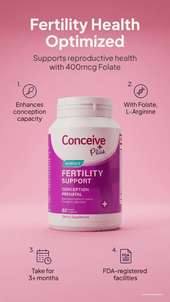
Conceive Plus Men's Fertility Support
Designed to support healthy sperm production, motility, and overall male reproductive health with clinically studied nutrients.
Shop Now →What specific nutrients should men look for in a fertility supplement?
Men trying to conceive should prioritize supplements containing zinc, selenium, L-carnitine, coenzyme Q10 (CoQ10), and vitamin D, as these nutrients are clinically shown to support sperm health and motility. Folic acid is also important for men, as it supports DNA synthesis and may improve sperm quality. Unlike traditional prenatal vitamins formulated for women, male-specific fertility supplements are designed with optimal dosages of these nutrients to address men's reproductive health needs.
Are there any side effects from men taking traditional prenatal vitamins?
While most men can tolerate traditional prenatal vitamins without serious side effects, some may experience gastrointestinal discomfort, nausea, or constipation due to the high iron content typically included for pregnant women. Men generally do not need the elevated iron levels found in women's prenatal formulas, which can accumulate to unhealthy levels with long-term use. Male-specific preconception vitamins avoid these excess levels, making them a safer choice for men's reproductive health.
How long should a man take fertility supplements before trying to conceive?
Men should ideally begin taking male fertility supplements 2-3 months before attempting conception, as this timeframe aligns with the approximately 74-day cycle of sperm production (spermatogenesis). Starting supplementation early allows nutrients to positively influence sperm development and quality throughout their maturation process. The American Society for Reproductive Medicine (ASRM) recommends this preconception preparation period for couples looking to optimize fertility outcomes.
Do insurance plans cover male fertility supplements?
Most health insurance plans do not cover over-the-counter fertility supplements for men, as they are classified as dietary supplements rather than prescription medications. However, some high-deductible health plans or flexible spending accounts (FSAs) may allow you to use pre-tax dollars for supplement purchases if you have a prescription from your healthcare provider. It's best to check with your specific insurance plan or speak with a fertility specialist to understand your coverage options.
Is there scientific evidence that male prenatal vitamins improve conception rates?
Research published in peer-reviewed fertility journals shows that targeted male supplementation with nutrients like CoQ10, zinc, and selenium can improve sperm parameters such as motility, morphology, and DNA integrity. While individual results vary, studies suggest that men with poor sperm quality may see measurable improvements in 2-3 months of consistent supplementation. However, fertility is multifactorial, and supplements work best when combined with lifestyle modifications and, if needed, consultation with a reproductive urologist.
Can men's fertility supplements interact with medications?
Some fertility supplement ingredients can interact with common medications, particularly blood thinners, antacids, and certain antibiotics, so it's important to disclose all supplements to your healthcare provider. High-dose vitamin E and omega-3 supplements may have mild blood-thinning effects, and some minerals can interfere with medication absorption. Always consult with your doctor or a fertility specialist before starting any new supplement regimen to ensure safety and efficacy with your current health profile.
What's the difference between male fertility supplements and standard multivitamins?
Male fertility supplements are specifically formulated with higher concentrations of reproductive-health-focused nutrients like CoQ10, L-carnitine, and antioxidants that support sperm production and function. Standard multivitamins provide general nutritional support but typically lack the specialized compounds and dosages needed to optimize male fertility. For men actively trying to conceive, fertility-specific supplements are more targeted and evidence-based than generic multivitamins.
Trusted by Couples in Over 70 Countries
Support Male Fertility From the Inside Out
Male fertility is just as important as female fertility in the conception journey. Conceive Plus Men's range delivers targeted nutritional support to promote healthy sperm and overall reproductive wellbeing.
Shop Men's Range →