What You Need to Know about Ovulation When Trying to Conceive


How does ovulation work?
Each month, your ovaries release a single egg. The process starts with the production of estrogen and other hormones, which stimulate your ovaries’ follicles and get your body ready for ovulation. At the peak of your cycle, usually 12-18 days after your period finishes, your ovaries release an egg. The egg descends through the fallopian tubes and settles in your uterus. It will stay there for about 12-24 hours, which is your window for fertilization. If the egg isn’t fertilized in that period, your uterus will shed its lining, along with the egg.When can I get pregnant?
It’s difficult to pinpoint exactly when your body is ovulating, so you usually won’t be able to pick a specific day for conception. Keep in mind that you’ll usually be ovulating 12-18 days after the end of your period. If you have a very regular menstrual cycle, it will be easier to predict when you’re ovulating. Sperm can survive inside the body for up to 7 days, so women are the most fertile in the week leading up to ovulation. For the best chance of conception, you should have sex regularly starting around the 10th or 11th day of your cycle and continuing through the 18th. It’s possible, but less likely, to get pregnant outside of this window.Are there ways to tell when I’m ovulating?

✨ Trying to Conceive?
Our Ovulation & Fertility Bundle combines Myo-Inositol with essential vitamins to support healthy hormone balance and regular ovulation.
Shop Now — $55.00✓ Free shipping on orders over $40 | ✓ Trusted by millions of couples worldwide
Conceive Plus Ovulation Calculator
Use our ovulation calculator to find out the best time to get pregnant. Understanding when you are ovulating (your fertility period) will significantly increase your chances of conception.
Finding your cycles to be irregular or diagnosed with PCOS? Conceive Plus Can help!
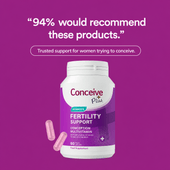
Support your journey to parenthood with Conceive Plus Ovulation Support Myo-Inositol Supplement + Q10 and Ginger. Specially formulated to enhance ovulation and overall reproductive health, this supplement provides 120 capsules of essential nutrients designed to promote regular cycles and improve fertility.

🌱 Support Your Fertility Journey
Conceive Plus fertility supplements are clinically formulated to help regulate your cycle and support egg quality.
Shop Fertility Support →Frequently Asked Questions
Recommended by Fertility Experts
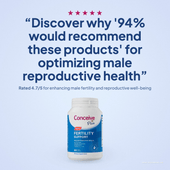
Conceive Plus Men's Fertility Support
Designed to support healthy sperm production, motility, and overall male reproductive health with clinically studied nutrients.
Shop Now →How long does ovulation last and when is the best time to have intercourse?
Ovulation itself lasts only 12-24 hours, but your fertile window is much longer—typically 5-6 days before ovulation through the day of ovulation. Since sperm can survive up to 7 days in the reproductive tract, the American Society for Reproductive Medicine (ASRM) recommends having intercourse regularly from day 10-11 through day 18 of your cycle for the best conception chances. For couples with regular cycles, this approach maximizes the likelihood of sperm meeting the egg at the optimal time.
What is basal body temperature and how do I track it for ovulation?
Basal body temperature (BBT) is your lowest body temperature, measured immediately upon waking before any activity. When you ovulate, a slight increase of 0.5-1 degree Fahrenheit occurs due to the hormone progesterone, signaling that ovulation has just occurred. To use this method effectively, measure your temperature at the same time each morning with a basal thermometer and record it on a chart for several months to identify your personal ovulation pattern.
Are ovulation predictor kits accurate, and does insurance cover them?
Ovulation predictor kits (OPKs) are FDA-approved devices that detect the luteinizing hormone (LH) surge occurring 24-48 hours before ovulation, making them highly accurate when used correctly. While insurance coverage for OPKs varies by plan, many fertility clinics recommend them as a first-line tool for predicting ovulation. Some insurance plans may cover these kits under fertility benefits, so it's worth checking with your provider or contacting your insurance company directly.
Can I get pregnant if my menstrual cycle is irregular?
Yes, you can still conceive with an irregular cycle, but predicting ovulation becomes more challenging. If your cycles vary significantly in length, tracking methods like basal body temperature or ovulation predictor kits become especially valuable. Consider consulting with a fertility specialist or your OB-GYN if your cycles are very irregular, as this could indicate hormonal imbalances that may benefit from evaluation or treatment.
What hormonal changes indicate that ovulation is about to happen?
The most significant hormonal change is a surge in luteinizing hormone (LH), which triggers ovulation within 24-48 hours and is what ovulation predictor kits detect. You may also experience increased cervical mucus that becomes clear, stretchy, and slippery—often described as similar to egg white—along with mild pelvic discomfort or slight cramping. Some women also notice subtle changes in cervical position, becoming higher, softer, and more open as estrogen levels peak just before ovulation.
Should I see a fertility specialist if I'm having trouble predicting my ovulation?
If you've been tracking ovulation for several months without success or have concerns about irregular cycles, it's reasonable to consult with a fertility specialist or reproductive endocrinologist. The American Society for Reproductive Medicine recommends evaluation after 1 year of unprotected intercourse for women under 35, or after 6 months for women 35 and older. A specialist can perform blood tests, ultrasounds, and other diagnostic measures to assess your ovulation pattern and identify any underlying issues affecting fertility.
Can lifestyle factors affect my ovulation cycle?
Yes, factors including extreme stress, significant weight changes, intense exercise, poor nutrition, and inadequate sleep can disrupt your ovulation cycle and affect fertility. Maintaining a balanced diet, moderate exercise, healthy weight, stress management, and adequate sleep all support regular ovulation and hormonal balance. If you're struggling with cycle irregularities, discussing lifestyle modifications with your healthcare provider or a fertility specialist can help identify adjustable factors affecting your reproductive health.
Trusted by Couples in Over 70 Countries
Support Male Fertility From the Inside Out
Male fertility is just as important as female fertility in the conception journey. Conceive Plus Men's range delivers targeted nutritional support to promote healthy sperm and overall reproductive wellbeing.
Shop Men's Range →