Ovulation Tracking: The Complete Science-Backed Guide to Identifying Your Fertile Window for Maximum Conception Success


Ovulation is the single most important event in the menstrual cycle when it comes to conception. It is the process by which a mature egg is released from the ovary, travelling down the fallopian tube where it may meet sperm and become fertilised. Understanding when and how ovulation occurs is the cornerstone of successful family planning, yet research published in Human Reproduction suggests that only 13% of women can accurately identify their fertile window without formal training in fertility awareness methods.
The ovulatory process is governed by a complex hormonal cascade beginning in the brain. The hypothalamus releases GnRH, signalling the pituitary to produce FSH and LH. FSH stimulates ovarian follicle growth. When oestrogen reaches a critical threshold, it triggers the LH surge — which causes the dominant follicle to release its egg approximately 24 to 36 hours later.
This fertile window spans approximately six days: the five days before ovulation and the day of ovulation itself. Sperm can survive up to five days in the female tract, while the egg remains viable for only 12 to 24 hours. A study in the New England Journal of Medicine found the probability of conception rises from approximately 10% five days before ovulation to over 30% on the day before and day of ovulation.
Several factors influence ovulation predictability. Age plays a significant role, with ovulatory quality declining after 35 and more sharply after 40. Body mass index also matters — both underweight and overweight women are more likely to experience anovulatory cycles. Stress, thyroid disorders, and conditions such as PCOS can disrupt ovulation entirely.
Modern Ovulation Tracking Methods: From Basal Temperature to Wearable Technology
Basal Body Temperature (BBT) charting confirms ovulation after the fact by detecting the sustained temperature rise caused by progesterone. A meta-analysis found BBT 72% accurate with proper charting rules.
Ovulation Predictor Kits (OPKs) detect the LH surge with 99% accuracy. Test in late afternoon (2-5 PM) for best results, as LH surges commonly begin in early morning.
Cervical Mucus Monitoring requires no equipment — fertile mucus resembles raw egg white. Trained women identify their fertile window with 93% accuracy.
Wearable fertility trackers offer 89% sensitivity and 86% specificity for identifying fertile days.
Optimise Your Body for Conception
Conceive Plus Women's Fertility Support provides evidence-based nutrients for healthy ovulation and egg quality.
Fertility Tracking Apps: Helpful Tool or Potential Pitfall?
Calendar-based apps have a median prediction error of 2.5 days. Apps incorporating BBT, OPK results, and mucus observations achieve 98.2% effectiveness. However, many apps are not regulated as medical devices. Always cross-reference with physical signs.
Irregular Cycles and Ovulation Tracking: Strategies That Work
For women with PCOS or irregular cycles, start tracking earlier and combine multiple methods. The most effective approach is using BBT charting alongside OPK testing and mucus observation. A fertility specialist can perform progesterone testing to confirm ovulation.
Recognising Anovulatory Cycles
Anovulatory cycles occur in 10-18% of regular cycles. Signs include no BBT shift, no fertile mucus, and negative OPKs. If persistent, medical evaluation including blood tests for FSH, LH, oestradiol, and TSH can identify the cause. Lifestyle modifications and medications like letrozole successfully restore ovulation in 70-80% of PCOS patients.
Optimising Timing: The Science of Intercourse
Highest conception rates occur on the day before ovulation (37%) and day of ovulation (33%). Begin intercourse every other day once fertile mucus appears, increasing to daily during peak window.
Common Ovulation Tracking Mistakes
Test OPKs between 2-8 PM, maintain consistent BBT measurement times, combine multiple methods, and account for lifestyle factors like alcohol, illness, and sleep disruption that can temporarily affect readings.
Frequently Asked Questions
Q: How long to conceive with tracking?
Most conceive within 3-6 cycles of consistent tracking.
Q: Can I rely on BBT alone?
BBT confirms after ovulation. Combine with OPKs and mucus.
Q: Best time for OPK?
Late afternoon 2-5 PM.
Q: Do fertility apps work?
Apps with real data work. Avoid calendar-only.
Q: Can stress affect ovulation?
Yes, high stress can delay or suppress ovulation.
Q: Sperm survival time?
Up to 5 days with fertile mucus.
Q: What is the fertile window?
Six days ending day of ovulation.
Q: Should I use fertility lubricant?
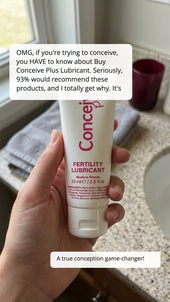
Yes. Standard lubricants harm sperm. Conceive Plus supports sperm health.
Q: What if cycles are irregular?
Start earlier, combine methods, consult specialist.
Q: How to know anovulatory cycle?
No BBT shift, no mucus, negative OPKs.
Support Your Fertility Journey with Conceive Plus
Our fertility-friendly lubricant is clinically shown to support sperm motility while providing comfort during your fertile window.