Prenatal Vitamins for Men: 5 Common Myths Debunked for 2026


Did you know that male factors contribute to approximately 40 to 50% of all infertility cases? For too long, the preconception journey has focused almost entirely on women, leaving many men feeling excluded or confused about whether prenatal vitamins for men are actually necessary. It's natural to feel anxious about your sperm count and wonder if your current lifestyle or a standard multivitamin is enough. You deserve clear, scientific answers instead of marketing hype.
We'll bridge that gap by exploring the biological reality of male preconception health and why targeted supplementation is often the missing piece of the fertility puzzle. This article debunks five common myths, covering everything from the 74 to 90 day sperm development cycle to the truth about FDA manufacturing standards. You'll gain a clear understanding of male fertility biology and discover evidence-based reasons to start a supplement that improves your chances of successful conception.
Key Takeaways
- Understand your 50/50 role in conception and why your genetic blueprint is just as critical as your partner's for a healthy pregnancy.
- Learn why the 90 day sperm production cycle means you shouldn't wait until you're ready to conceive to start your health regimen.
- Discover the specific nutrient gaps in standard multivitamins and how prenatal vitamins for men provide the optimized doses needed for fertility.
- Find out how to identify and reverse oxidative stress to improve sperm quality and lower DNA fragmentation scores.
- Get a clear framework for evaluating supplement labels for ingredient transparency and third-party testing to ensure you're getting effective support.
Myth 1: 'Prenatal Vitamins are Only Necessary for Women'
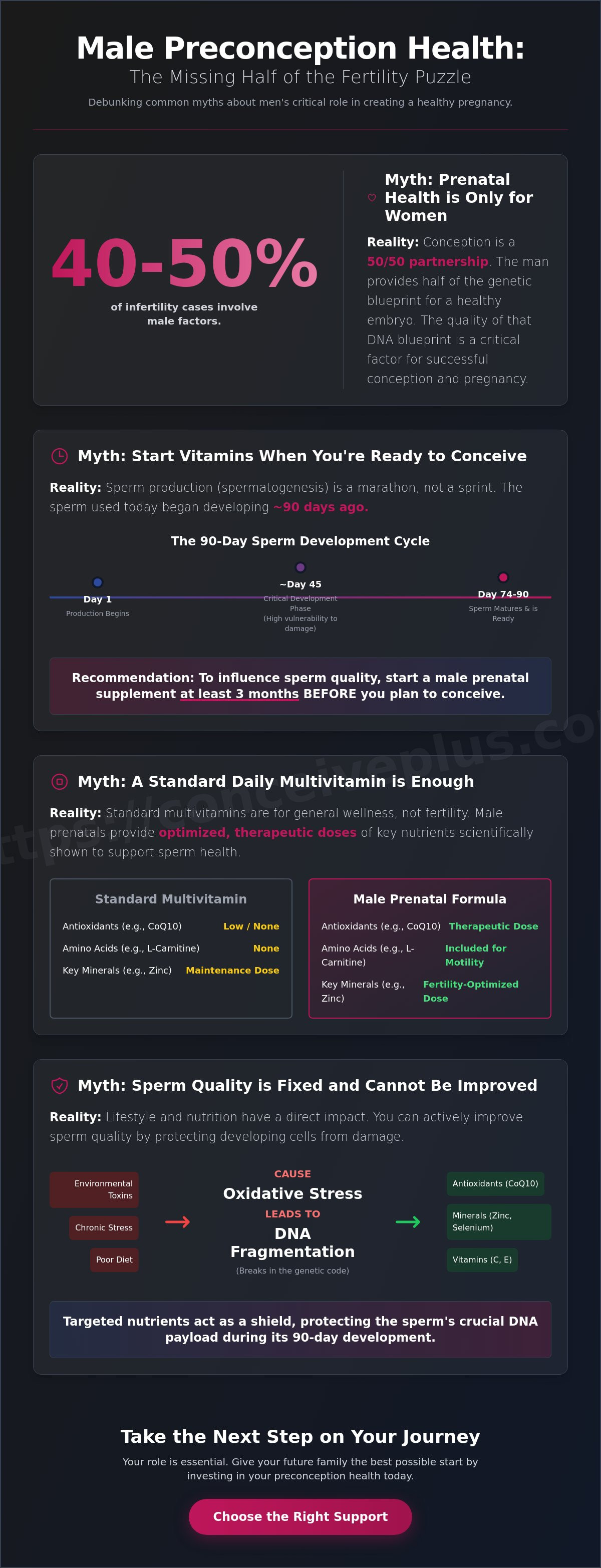
"Prenatal" isn't a gendered term. It simply means "before birth." When we talk about prenatal vitamins for men, we're talking about preparing the male half of the genetic equation for success. For decades, the fertility conversation focused almost exclusively on the womb, but science in 2026 tells a different story. Conception is a 50/50 partnership. Men provide exactly half of the genetic blueprint required to create a healthy embryo. If that blueprint is damaged or incomplete, the pregnancy may struggle to take hold or progress.
Modern life adds layers of complexity. From environmental toxins and microplastics to the chronic stress of 21st century careers, the male reproductive system is under constant pressure. These factors don't just affect sperm count; they impact the very quality of the DNA being delivered. Ensuring you're nutritionally prepared is no longer a lifestyle choice; it's a biological necessity for successful implantation and embryo development.
To better understand how supplements fit into this picture, watch this helpful video:
The Genetic Contribution of Sperm
Sperm does more than just "get there." It carries epigenetic markers that influence how a child develops long after conception. The biological process of Spermatogenesis takes nearly three months, and during this time, the developing cells are highly vulnerable to oxidative stress. This stress can lead to high DNA fragmentation. DNA fragmentation is the occurrence of physical breaks or lesions in the genetic strands within the sperm, often serving as a hidden cause of early pregnancy loss. Using prenatal vitamins for men helps shield these cells from damage during their critical development phase.
Addressing the 'Healthy Eater' Fallacy
You might think a balanced diet covers all your bases, but even a "perfect" plate often falls short of the therapeutic doses needed to optimize fertility. Modern soil depletion has significantly reduced the mineral content in our produce compared to fifty years ago. While it's helpful to focus on Top Foods to Increase Sperm Count, food alone rarely provides the concentrated levels of antioxidants like CoQ10 or L-Carnitine required to reverse oxidative damage. Supplements fill these specific gaps that your daily meals can't quite reach.
Myth 2: 'You Only Need to Start Taking Vitamins When You're Ready to Conceive'
Timing is everything when you're trying to conceive, but the clock starts much earlier than most men realize. Many people assume they can wait until their partner's fertile window to start focusing on their health. This "quick fix" mentality ignores the fundamental biology of the male reproductive system. The truth is that the sperm you use today was actually created months ago. If you wait until you're actively trying to conceive to start taking prenatal vitamins for men, you've already missed the most critical window for influencing the quality of those specific cells.
The biological reality is that sperm production is a marathon, not a sprint. Maintaining consistent nutrient levels in your bloodstream is essential for ensuring that every batch of sperm is as healthy as possible. Taking proactive preconception health steps at least three months before you begin trying can make a significant difference in your success rates. It's about creating a stable, nutrient-rich environment for development rather than trying to boost your system at the last minute.
The 90-Day Sperm Production Timeline
Spermatogenesis, the process of creating new sperm, takes approximately 74 to 90 days. This cycle involves several complex phases where cells divide, transform, and eventually grow the tails needed for motility. During this three-month journey, developing sperm are incredibly sensitive to nutritional deficiencies. If your body lacks key antioxidants or minerals during the middle of this cycle, it can lead to "weak" batches of sperm with poor morphology or low movement. Starting a protocol of prenatal vitamins for men early ensures that every stage of this 90-day assembly line has the raw materials it needs to build high-quality results.
Long-term Benefits vs. Quick Fixes
There's no such thing as a fertility pill that works overnight. Nutritional support works cumulatively. It takes time for ingredients like Zinc, Selenium, and CoQ10 to reach therapeutic levels in your tissues and begin shielding developing gametes from oxidative damage. By the time you reach the three-month mark of consistent supplementation, you've built a protective barrier that supports sustained sperm health. If you're looking for the right tools to start this journey, you can explore specialized fertility products designed for long-term support. Investing in your health today pays off in the quality of the genetic blueprint you provide three months from now. For more tailored support, it's always a good idea to check out comprehensive fertility solutions that fit your specific needs.
Myth 3: 'A Standard Daily Multivitamin is the Same as a Male Prenatal'
You might think your daily drugstore multivitamin is doing the heavy lifting, but it's likely just scratching the surface. Standard multivitamins are designed for "maintenance." They provide the bare minimum required to prevent nutritional deficiencies in the general population. In contrast, prenatal vitamins for men are engineered for "optimization." When you're trying to conceive, your body's metabolic demands shift. You aren't just maintaining your own health; you're fueling the rapid production of millions of new cells every single day.
The difference often comes down to what's missing from the label. Many generic multivitamins omit high-cost, high-volume ingredients like L-Carnitine or CoQ10 because they take up too much space in a single pill or increase production costs. However, a recent review of male fertility supplements found that only 22% of the 90 distinct ingredients commonly used actually had scientific evidence supporting their use. This highlights the importance of choosing a formula that focuses on proven, fertility-specific compounds rather than a "kitchen-sink" approach that offers a little bit of everything but not enough of anything.
Targeted Nutrients for Sperm Quality
- Zinc: This is the heavy hitter for male reproductive health. It's essential for maintaining healthy testosterone levels and semen volume. For a deeper look at how this mineral works, read our guide on Zinc for Male Fertility.
- Selenium: This trace mineral is crucial for sperm morphology. It helps ensure that sperm develop the correct shape and structure, which is vital for their ability to penetrate an egg.
- L-Carnitine: Think of this as the fuel for your sperm's engine. It provides the energy required for motility, helping sperm swim more effectively toward their target.
The Bioavailability Factor
The form of the vitamin matters just as much as the dosage. Many standard multis use synthetic folic acid because it's cheap and shelf-stable. However, a significant portion of the population has a genetic variation that makes it difficult to convert synthetic folic acid into its active form. High-quality prenatal vitamins for men use methylfolate instead. This is the "body-ready" version of the vitamin that supports healthy DNA synthesis without requiring extra metabolic steps. By using chelated minerals and methylated vitamins, premium prenatals bypass common absorption issues and ensure your body actually utilizes the nutrients you're paying for. This level of precision is rarely found in a one-size-fits-all daily multivitamin.
Myth 4: 'Sperm Quality is Fixed and Cannot Be Improved'
Many men view their fertility status as a static score. If a semen analysis shows low numbers, it often feels like a permanent verdict. This is one of the most discouraging misconceptions in reproductive health. Unlike women, who are born with all the eggs they will ever have, men are constant producers. Your body is a sperm-making factory that never shuts down. This means you have a fresh opportunity to improve your output every few months by changing the "raw materials" and environment your body uses during production.
The regenerative nature of the male reproductive system is its greatest strength. While external factors like excessive heat from laptops, radiation, and environmental toxins can temporarily degrade sperm quality, the damage isn't always permanent. By removing these stressors and introducing targeted prenatal vitamins for men, you can often move the needle on key parameters. Many men see measurable improvements in sperm count, motility, and morphology after sticking to a dedicated protocol for three to six months.
Combating Oxidative Stress
Developing sperm are incredibly vulnerable to Reactive Oxygen Species (ROS). These are unstable molecules that "attack" the delicate sperm membranes and can even break the DNA strands inside the sperm head. Think of vitamins C, E, and Zinc as an "Antioxidant Shield." These nutrients neutralize ROS before they can cause lasting harm to the developing cells. Oxidative stress is a leading cause of male-factor infertility because it creates high DNA fragmentation, which directly interferes with the sperm's ability to fertilize an egg or sustain a pregnancy.
Environmental and Lifestyle Adjustments
Supplements don't exist in a vacuum. They work most effectively when paired with a fertility-friendly environment. This includes prioritizing consistent sleep, managing body weight, and avoiding habits that increase scrotal temperature. There's a powerful synergy between high-quality prenatal vitamins for men and these lifestyle shifts. When you provide the right nutrients while simultaneously reducing environmental "noise," you give your body the best possible chance to produce high-performing sperm. To stay organized and monitor your progress through these changes, you can use Conceive Plus tracking tools to keep your journey on the right path.
If you're ready to stop guessing and start optimizing your reproductive health, you can explore specialized fertility support bundles designed to help you reach your goals faster.
Taking the Next Step: Choosing the Right Support for Your Journey
Deciding to start a family is one of the most significant joint ventures you'll ever undertake. Now that you understand why prenatal vitamins for men are a biological necessity rather than an optional extra, the next step is identifying a product that actually delivers on its promises. In 2026, the supplement market is more crowded than ever. You shouldn't settle for "kitchen-sink" formulas that hide behind proprietary blends. Instead, prioritize brands that offer full transparency, third-party testing, and manufacturing that follows Current Good Manufacturing Practices (cGMP).
A high-quality ingredient list is your best defense against ineffective marketing. When you're evaluating options, look for the bioavailable forms we've discussed, such as methylfolate and chelated minerals. These ensure your body can actually absorb the nutrients rather than just passing them through your system. Choosing the right support means looking beyond the price tag and focusing on the clinical evidence behind each ingredient. When both partners take a proactive approach to their health, the chances of a successful, healthy pregnancy increase significantly.
The Conceive Plus Advantage
Conceive Plus has built a global reputation by focusing on the specific physiological needs of couples trying to conceive. The formulation for our male-focused supplements is specifically designed to support sperm motility and count, addressing the two most common hurdles in male fertility. Rather than taking a fragmented approach, many couples find success using Conceive Plus TTC Fertility Bundles. These bundles provide coordinated support for both partners, ensuring that the genetic contribution from both sides is optimized. If you're looking for real-world proof, you can read through thousands of Conceive Plus Reviews from parents who've successfully navigated their fertility journey with our support.
Your Preconception Checklist
- The 90-Day Rule: Start your prenatal vitamins for men at least three months before you plan to conceive to cover the full cycle of sperm production.
- Track Your Window: Use an ovulation calculator to identify the most fertile days of the month and time intercourse effectively.
- Optimize the Environment: Pair your nutritional support with a sperm-friendly lubricant. Standard lubricants can often act as a barrier to sperm, so using a specialized formula helps them reach their destination safely.
- Stay Consistent: Fertility isn't about a single "perfect" day; it's about the cumulative health of your system over several months.
Empower Your Path to Parenthood
Understanding the science of spermatogenesis changes the way you look at your health. You aren't a passive observer in the conception process; you're providing exactly half of the genetic code for your future child. By debunking these common myths, it's clear that starting prenatal vitamins for men at least three months before trying to conceive is a vital step for any couple. You have the biological power to improve sperm quality, reduce oxidative stress, and optimize your reproductive health through targeted, high-bioavailability nutrition that standard multivitamins simply can't match.
Don't leave your family's success to chance. Conceive Plus is recommended by fertility clinics worldwide and formulated with the specific nutrients your body needs to excel. With over 10,000 positive reviews from TTC couples, our products are designed to support you every step of the way. You now have the evidence-based facts to move forward with confidence and clarity. Your journey to fatherhood starts with the choices you make today. Shop the Best-Selling Male Fertility Support at Conceive Plus and give your future child the strongest possible start.
Frequently Asked Questions
Do men really need to take prenatal vitamins?
Yes, men should take them because they contribute exactly half of the genetic material required for a healthy pregnancy. While women's health is often the primary focus, male-factor issues contribute to 40% to 50% of all infertility cases. Taking prenatal vitamins for men ensures that the genetic blueprint you're providing is as high-quality as possible, which supports successful implantation and reduces the risk of early pregnancy loss.
How long before trying to conceive should a man start taking vitamins?
You should start at least three months before you begin trying to conceive. This timeline aligns with the 74 to 90 day cycle of sperm production, known as spermatogenesis. Because the sperm you use today was actually created months ago, starting early ensures that the developing cells have the nutritional support they need throughout their entire maturation process to reach peak quality.
Can male prenatal vitamins improve sperm count?
Targeted supplementation can definitely help improve sperm count and other key parameters like motility. Ingredients like Zinc and Selenium are essential for the physical production of sperm in the testes. By reducing oxidative stress and providing the necessary building blocks for cell division, these vitamins help your body produce a higher volume of healthy, viable sperm cells ready for conception.
What is the difference between a multivitamin and a male prenatal?
A standard multivitamin is designed for general health maintenance, while a male prenatal focuses on reproductive optimization. Most drugstore multis lack therapeutic doses of CoQ10, L-Carnitine, and Lycopene. These specific antioxidants are vital for protecting sperm from DNA damage and providing the energy needed for motility, which general vitamins often overlook in their one-size-fits-all formulas.
Are there any side effects to taking male fertility supplements?
Most men don't experience significant side effects, though some may notice mild digestive changes or a different color in their urine due to B vitamins. It's best to take your supplements with a meal to minimize any potential stomach upset. If you have underlying health conditions or take prescription medications, you should always consult your healthcare provider before starting a new supplement regimen.
Can men take female prenatal vitamins?
It's better to avoid female prenatals because they aren't formulated for male biology. Female versions often contain high levels of iron, which men generally don't need in large amounts and can even be harmful over time. They also lack the specific concentrations of Zinc, Selenium, and L-Carnitine required to support healthy sperm development and the high energy demands of motility.
What are the most important ingredients in a male prenatal?
The most critical ingredients include Zinc for testosterone support, Selenium for morphology, and CoQ10 for cellular energy. You should also look for L-Carnitine to boost motility and Methylfolate for healthy DNA synthesis. These ingredients work together to shield developing sperm from oxidative stress and ensure they have the structural integrity needed to successfully fertilize an egg and sustain a pregnancy.
How do I know if the prenatal vitamins are working?
The most objective way to tell is through a semen analysis performed after at least 90 days of consistent use. You might also notice general improvements in your energy levels or overall vitality as your nutrient gaps are filled. Ultimately, the goal of prenatal vitamins for men is successful conception and a healthy pregnancy, which remains the most important indicator that the supplements are doing their job.