Vitamins to Get Pregnant Fast: Myths vs. Science-Backed Reality for 2026


The "magic pill" that promises to help you conceive overnight doesn't exist, even though the $2.88 billion fertility supplement market might suggest otherwise. While many people search for vitamins to get pregnant fast, the biological reality is that your eggs require a 90-day lead time to reach maturity. This means the supplements you take today are actually an investment in your fertility three months from now.
It's completely normal to feel frustrated by the monthly wait or overwhelmed by the fear of age-related decline. You deserve a clear path forward that doesn't involve wasting money on "natural" or "premium" labels that have no legal meaning. You'll discover how to identify evidence-based ingredients that truly impact your conception timeline. We'll break down the latest 2026 regulatory shifts, why the World Health Organization reports that two-thirds of women are micronutrient deficient, and how to build a preconception plan that sets realistic expectations for your journey.
Key Takeaways
- Understand why getting pregnant "fast" actually requires a 90-day biological lead time to optimize egg quality before ovulation.
- Learn the critical difference between folic acid and folate, especially if you have the MTHFR gene variant that affects nutrient processing.
- Discover why your partner also needs vitamins to get pregnant fast, as male reproductive health is responsible for nearly half of all conception timelines.
- Identify which supplements require healthy fats for proper absorption so you don't waste money on nutrients your body can't use.
- Explore how targeted fertility support capsules and comprehensive bundles can help streamline your daily preconception routine.
The "Magic Pill" Myth: Can Vitamins Really Make You Pregnant "Fast"?
Many people spend hours searching for vitamins to get pregnant fast, hoping for a shortcut to a positive pregnancy test. However, vitamins aren't biological switches that turn on fertility instantly. They act as catalysts. They provide the raw materials your body needs to regulate hormones and produce healthy cells. If your body lacks these nutrients, the reproductive system often slows down or experiences "glitches" like irregular ovulation.
Taking a supplement today won't result in a positive test tomorrow. In reproductive medicine, "fast" is measured in cycles rather than days. It takes time to build up nutrient stores and influence the quality of your eggs or your partner's sperm. According to a January 2026 report from the World Health Organization, over two-thirds of non-pregnant women are deficient in at least one key micronutrient. Correcting these deficiencies takes consistent effort. Think of it as preparing the soil before planting a seed. Without the right nutrients, the environment isn't ready to sustain new life.
To better understand how these nutrients impact your body, watch this helpful video:
Myth: Prenatal Vitamins Are Only for Once You Are Pregnant
Many women wait until they see two pink lines before they start taking supplements. This is a common mistake that can impact the earliest stages of development. Folic acid is essential for the closure of the neural tube, which happens within the first 28 days of pregnancy. This often occurs before you even realize you've missed a period. Preconception vitamins serve as the foundation for a healthy 2026 pregnancy by ensuring these nutrients are available from the very first moment of conception.
The Difference Between "Fertility Pills" and Prenatals
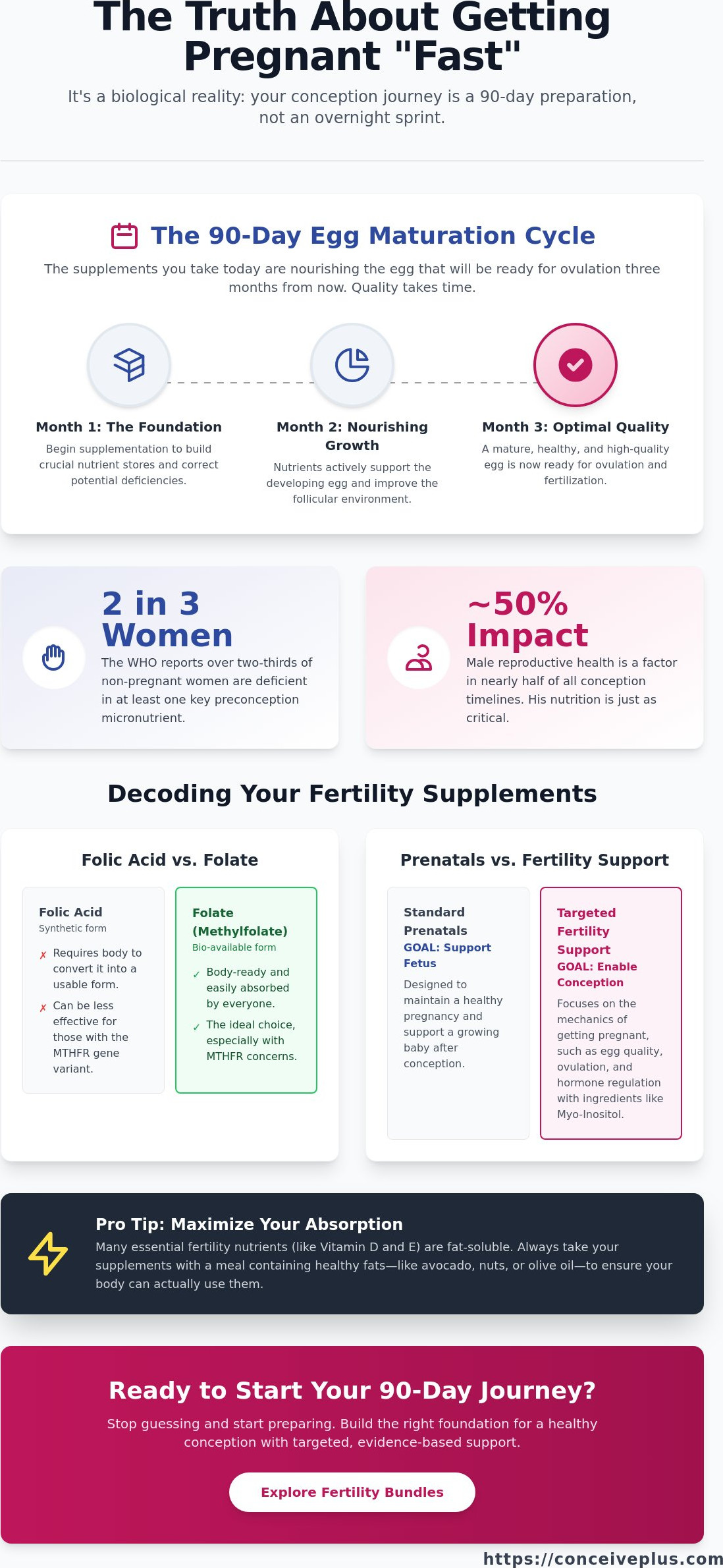
While standard Prenatal vitamins are designed to support a growing fetus, targeted fertility support capsules focus on the mechanics of getting pregnant. Basic multivitamins provide broad coverage, but they might miss specific ingredients like Myo-Inositol. This compound is frequently used to support egg quality and insulin sensitivity, which are critical for regular ovulation. Using a specialized formula can help bridge the gap between general wellness and specific reproductive needs. These formulas often contain higher concentrations of antioxidants to protect cells from oxidative stress. For a deeper look at how these ingredients work, you can read our fertility prenatal vitamins guide to learn about ingredient analysis.
When you use targeted vitamins to get pregnant fast, you aren't just taking a multivitamin; you are addressing specific biological hurdles. Whether it's supporting hormone balance or improving the quality of the cervical mucus, these nutrients work behind the scenes to optimize every stage of your cycle. This proactive approach is what actually moves the needle on your conception timeline.
The 90-Day Rule: Why "Fast" Conception Starts Three Months Ago
If you're looking for vitamins to get pregnant fast, the most important thing to learn is the biological calendar of your ovaries. While ovulation happens once a month, the egg you release today didn't just appear. It has been on a developmental journey for approximately 90 days. This three-month window is your biggest opportunity to influence egg quality through nutrition. When you start a supplement regimen, you aren't just feeding your current cycle; you're nourishing the eggs that will be ready for fertilization three months from now.
This reality often surprises people who expect immediate results. Because the maturation process is a slow burn, the "sweet spot" for conception usually occurs during the third month of consistent supplementation. This is when your body has had enough time to correct micronutrient deficiencies and lower oxidative stress levels within the follicular environment. If you want to see real progress, you have to play the long game. Patience in the first eight weeks often leads to better outcomes in the twelfth.
The Egg Maturation Cycle Explained
The follicular development phase is a complex, step-by-step process. During these 90 days, the egg grows significantly and requires a massive amount of energy to prepare for potential fertilization. Antioxidants like CoQ10 play a vital role here. They help protect the egg's mitochondria from damage, ensuring the cell has the energy needed for successful fertilization and early embryo division. High nutrient density also improves hormonal signaling, making sure your body receives the right cues to trigger a healthy ovulation. Without these building blocks, the maturation process can stall or produce eggs that are less viable for a successful pregnancy.
Consistency vs. Potency
A common mistake is trying to make up for lost time with "high-dose" emergency supplementation right before ovulation. Biology doesn't work that way. Your body can only absorb and utilize a certain amount of nutrients at once. Skipping days or being inconsistent effectively resets your biological progress. It disrupts the steady supply of vitamins your developing follicles rely on. To maintain a 90-day streak, try pairing your vitamins with a daily habit like your morning coffee or evening skincare routine. Consistency beats potency every single time when you're trying to optimize your fertility timeline.
To ensure you have everything you need for this 90-day window, you might consider using comprehensive fertility bundles that simplify your daily routine and provide consistent support.
Folic Acid vs. Folate and Other Supplement Misconceptions
The debate between folic acid and folate is one of the most polarizing topics for anyone researching vitamins to get pregnant fast. It's not just a matter of semantics; it's about how your body processes these essential nutrients. Folic acid is the synthetic form of Vitamin B9, while folate is the form found naturally in foods. For most people, the body converts folic acid into an active form called methylfolate quite easily. However, the rise of genetic testing has highlighted the MTHFR gene mutation, which can make this conversion process less efficient for some individuals.
If you have this mutation, your body might struggle to utilize standard folic acid, potentially leaving you with a deficiency despite taking a daily supplement. In these cases, choosing a supplement with methylfolate is often a better strategy. This isn't just about following a trend. It's about ensuring your body has the bioavailable tools it needs to support DNA synthesis and cell division during those critical first days after conception. Understanding your specific biological needs helps you avoid the "one size fits all" trap that often leads to frustration.
Another dangerous myth is the idea that "more is always better." While you want to correct deficiencies, megadosing on certain vitamins can actually hinder your fertility. For example, excessive intake of Vitamin A in its retinol form can be harmful to a developing embryo. Similarly, too much iron can lead to oxidative stress, which damages egg quality. The goal is balance, not excess. A well-formulated supplement provides the right ratios to support your body without overwhelming your system or causing adverse side effects.
Folic Acid: The Gold Standard for Neural Tube Health
Despite the folate trend, major medical bodies like the CDC and ACOG still prioritize folic acid in their 2026 recommendations. This is because folic acid has decades of clinical data proving its effectiveness in preventing neural tube defects. It's highly stable and has excellent absorption rates for the majority of the population. If you're looking for a deeper dive into how different B-vitamins influence your reproductive health, you can explore our detailed guide on vitamins to help you conceive. Staying informed about these nuances ensures you aren't just taking vitamins to get pregnant fast, but taking the right ones for a healthy outcome.
The Truth About Herbal "Miracle" Remedies
The market is currently flooded with herbal "miracle" blends that promise instant results. You should approach these with caution. Unlike micronutrients like zinc or selenium, many herbs aren't strictly regulated and lack large-scale clinical trials. Some popular herbs can even backfire. For instance, certain botanical extracts used to "balance hormones" can actually disrupt a perfectly regular ovulation cycle if taken at the wrong time. Sticking to clinically studied micronutrients is a safer, more predictable way to optimize your fertility. It's better to rely on science-backed nutrition than on unregulated blends that might accidentally reset your progress.
Beyond the Bottle: How to Use Vitamins for Maximum Speed
Buying the right supplements is only the first step. If you want to use vitamins to get pregnant fast, you have to look at the logistics of absorption and the role of your partner. Many people overlook the fact that how you take your vitamins determines how much your body actually uses. For instance, fat-soluble vitamins like A, D, E, and K won't reach their full potential if you take them with just a glass of water. They need a small amount of dietary fat, like a handful of nuts or a piece of avocado, to move from your digestive tract into your system effectively.
Consistency in timing also helps maintain steady nutrient levels in your bloodstream. While it doesn't matter much whether you choose morning or evening, pick a time you can stick to every single day. Fluctuating levels can make it harder for your body to maintain the steady hormonal balance required for a predictable cycle. When you combine high-quality nutrition with precise cycle tracking, you create a data-driven approach to conception that removes much of the guesswork from the process.
The Male Factor: Boosting Sperm Speed and Count
One of the biggest gaps in fertility advice is the tendency to focus solely on the woman. However, male factors contribute significantly to the conception timeline. If your partner isn't also optimizing his nutrition, you're only addressing half of the equation. Zinc and Selenium are critical for sperm motility, which is the "speed" sperm need to reach the egg. Optimizing male health with targeted supplements can reduce the overall time to pregnancy by several months by improving sperm speed and count. A faster, stronger swimmer has a much better chance of meeting the egg during your fertile window.
Bioavailability: Taking Your Vitamins Correctly
Taking vitamins on an empty stomach is a frequent cause of nausea, which often leads people to quit their regimen before the 90-day mark. Beyond comfort, some nutrients actually compete for absorption. For example, high doses of calcium can interfere with how your body takes in iron. It's usually best to take your fertility capsules with your largest meal of the day to maximize bioavailability. To align your health improvements with your most fertile days, you can use our ovulation calculator to pinpoint exactly when your body is ready. This ensures that your nutrient buildup culminates in perfect timing.
Ready to start your journey with a science-backed plan? You can explore our full range of fertility support products designed for both partners.
The Conceive Plus Approach to Fertility Optimization
Conceive Plus believes that fertility is a shared journey between partners. While many people search for vitamins to get pregnant fast, we focus on providing the physiological balance required for long-term reproductive health. Our approach respects the 90-day maturation cycle we discussed earlier. Instead of offering "quick fixes" that don't align with human biology, our formulations provide the precise micronutrients needed to support your body's natural processes. We've spent years refining our products to ensure they meet the highest standards of safety and efficacy for every couple.
Couples navigating their 2026 TTC journey often tell us that having a clear, science-backed plan reduced their stress significantly. By moving away from the frustration of conflicting advice and toward a structured nutritional routine, they felt more in control of their fertility. It's not about forcing a result. It's about ensuring your body has every resource available when that fertile window opens. This shift in mindset from "speed at any cost" to "optimal preparation" is what truly moves the needle for most families we work with.
Targeted Support for Men and Women
Our specialized fertility support capsules are designed to address the distinct biological needs of both partners. For women, this means focusing on hormonal health and egg quality with ingredients like Myo-Inositol and Folate. For men, the focus shifts to sperm motility and count. Zinc and Selenium are foundational to our male formulas because they help protect sperm from oxidative damage and improve their ability to reach the egg. You can find our full range of best-selling fertility products to see which specific formulas match your current needs. Supporting both sides of the equation is the most effective way to shorten your overall timeline to conception.
Why Bundling Your Fertility Support Matters
The most successful strategies often involve synergy between different tools. This is why we advocate for a comprehensive approach that includes vitamins, fertility-friendly lubricants, and accurate tracking. Using Conceive Plus TTC fertility products bundles ensures you have everything you need without the stress of buying individual items every month. These bundles are designed to cover the full 90-day window, providing the consistency required for real biological change. They save you time and mental energy, allowing you to focus on your relationship rather than just the calendar. Your journey to parenthood is unique. We're here to support every step with products that prioritize your health and your future family.
Start Your 90-Day Path to Parenthood
Your journey toward conception is about more than just finding a quick fix. It's about respecting the 90-day biological cycle your body needs to prepare the highest quality eggs and sperm. By choosing science-backed nutrients and focusing on the health of both partners, you're building the strongest possible foundation for a healthy pregnancy in 2026. Remember that daily consistency always beats high-dose emergency supplementation.
While it's natural to look for vitamins to get pregnant fast, the most successful couples are those who treat their fertility as a marathon rather than a sprint. We've explored how targeted ingredients like folic acid and zinc work behind the scenes to optimize your environment. Conceive Plus is trusted by millions of couples worldwide and is clinically formulated for TTC success. Our approach is frequently featured in Conceive Plus Reviews for its effectiveness and transparency.
If you're ready to take the next step with a comprehensive, professional plan, Shop the Conceive Plus Fertility Support Bundles for 2026. Every small, consistent change you make today is a meaningful step closer to the family you're dreaming of. We're here to support you through every stage of this unique journey.
Frequently Asked Questions
Can I get pregnant in the first month of taking fertility vitamins?
It's possible to conceive in your first month, but any success is likely due to your natural fertility rather than the supplements. Most vitamins to get pregnant fast require at least three months to fully saturate your system and influence egg or sperm quality. Think of the first month as the beginning of a cumulative process that builds your nutrient reserves for future cycles.
Do I need to take a prenatal vitamin and a fertility supplement together?
You shouldn't take both unless specifically directed by a healthcare provider. Many fertility supplements already contain the essential vitamins found in a standard prenatal, such as folic acid and iron. Doubling up can lead to a dangerous excess of certain nutrients. It's better to choose a single, comprehensive formula that addresses both preconception needs and early pregnancy support.
Are there any vitamins that help with "old" eggs for women over 35?
While vitamins can't reverse the biological age of eggs, certain antioxidants can support the quality of the remaining egg reserve. Ingredients like CoQ10 are often used to boost mitochondrial energy within the cells. This helps eggs maintain the energy required for successful fertilization and early embryo division. Myo-Inositol is another common choice for supporting egg quality and insulin sensitivity as women age.
How long should my partner take male fertility vitamins before we see results?
Your partner needs to stay consistent for at least 90 days to see a measurable impact on sperm health. This timeframe aligns with the full cycle of sperm production, known as spermatogenesis. Any nutrients he takes today will only show up in the sperm released three months from now. Short-term use rarely provides enough time to improve the speed or count of the swimmers.
Can vitamins fix irregular periods to help me get pregnant faster?
Vitamins can support hormonal balance, which may lead to more regular cycles for some women. For example, Myo-Inositol is widely studied for its ability to help regulate ovulation in those with PCOS. However, supplements aren't a substitute for medical treatment if there's an underlying condition. They work best as a tool to optimize your body's natural rhythm over several months of use.
Is it possible to take too many fertility vitamins?
Yes, taking excessive amounts can be harmful to your health and your fertility. Fat-soluble vitamins like Vitamin A can be toxic in high doses, and too much iron can cause oxidative stress that actually damages your eggs. Always follow the dosage instructions on the label. Using high-quality vitamins to get pregnant fast is about finding the right balance, not taking the highest dose possible.
Should I stop taking fertility vitamins once I get a positive pregnancy test?
You don't need to stop immediately, but you should transition to a formula specifically designed for pregnancy. While fertility supplements share many ingredients with prenatals, your body's needs change once conception occurs. A standard prenatal will focus more on supporting the growing fetus and preventing deficiencies like anemia. It's best to consult your doctor to ensure your current regimen is safe for the first trimester.
Do fertility vitamins have side effects like nausea or breakouts?
Some people experience mild side effects like nausea, especially if they take supplements containing iron on an empty stomach. Certain B-vitamins or high doses of biotin can also trigger skin breakouts in sensitive individuals. To minimize these issues, always take your capsules with a full meal. If skin issues persist, you might need to look for a formula with lower levels of specific B-vitamins or different ingredient ratios.