I, at 37 years old was told my fertility was depleted and id need IVF to get pregnant.
Add to that I had no partner, so decided to go it alone, via at home Artificial insemination with a sperm donor (a friend).
I was told the chances of this working without fertility treatment/IVF/Donor eggs etc were very slim, near non existent.
I started trying last December 2013.
Every month I finely tuned my insemination technique, taking tips from lots of online resources.
I went from using a syringe to a soft cup (the type you use for periods), I added something every month when I was unsuccessful, I.E herbal medications to aid fertility, ovulation dip sticks, fertility scope, to look at saliva, etc (without going into gory details).
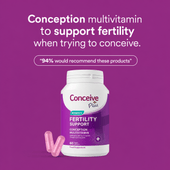
This last month I did 2 things differently, I started a vegan diet the day I ovulated last month (unsuccessful month) the diet wasnt actually for fertility reasons but moral reasons,( but Ive since read its a great fertility aid). I also added Conceive Plus, first time doing so, and Im now 5 weeks pregnant! It was definately either the veganism or the Conceive plus, or both, with my apparent poor fertility I would 100% recommend this to anyone.
Frequently Asked Questions
Recommended by Fertility Experts
Conceive Plus Men's Fertility Support
Designed to support healthy sperm production, motility, and overall male reproductive health with clinically studied nutrients.
Is at-home artificial insemination with a known donor legal in the United States?
Yes, at-home artificial insemination with a known donor is legal in most U.S. states, though regulations vary by location. However, it's recommended to consult with a fertility attorney to understand legal implications regarding parental rights, custody, and child support in your specific state. Using a known donor (versus an anonymous donor from a fertility clinic) requires a clear written agreement to protect all parties involved.
Conceive Plus Ovulation Support — scientifically formulated for cycle health
Can fertilizer lubricants like Conceive Plus actually improve fertility and conception chances?
Fertility-friendly lubricants like Conceive Plus are designed to be sperm-safe, unlike regular lubricants which can impair sperm motility and survival. While studies show these products don't harm sperm and may provide a better environment, they should be viewed as a supportive tool rather than a fertility treatment. The FDA does not regulate fertility lubricants as medical devices, so claims about conception success vary in scientific evidence.
What does the American Society for Reproductive Medicine (ASRM) recommend about age 37 and fertility decline?
The ASRM recognizes that female fertility naturally declines with age, with more significant changes after age 35, and that egg quality becomes a primary concern after age 37. However, individual fertility varies greatly, and age alone doesn't determine your ability to conceive. While fertility preservation options like egg freezing are often discussed at this age, natural conception is still possible, as individual cases vary significantly.
Are ovulation predictor kits and fertility scopes reliable for timing insemination?
Ovulation predictor kits (OPKs) that detect the LH surge are generally reliable when used correctly, with accuracy rates around 99% in detecting the surge itself. Fertility scopes that analyze saliva patterns are less scientifically validated than OPKs, though some users report them as helpful supplementary tools. For at-home insemination, combining OPKs with basal body temperature tracking and understanding your cycle length provides the most reliable ovulation prediction.
Does a vegan diet improve fertility and conception rates according to medical research?
Some research suggests that plant-based diets rich in antioxidants and nutrients may support reproductive health, but there is no definitive scientific evidence that veganism directly increases conception rates. Fertility outcomes depend more on overall nutrition quality, adequate calorie intake, and specific micronutrient levels (like iron, B12, and folate) rather than whether someone follows a vegan diet. If considering dietary changes for fertility, consulting with a reproductive nutritionist is recommended.
Should I consult a fertility specialist if I'm over 35 and trying to conceive at home
Conceive Plus Women's Fertility — trusted by thousands of couples
?
The ASRM recommends that women age 35 and older seek evaluation after 6 months of trying to conceive, rather than waiting the standard 12 months, due to age-related fertility decline. A preconception evaluation with a fertility specialist can assess egg reserve, overall reproductive health, and identify any barriers to conception before attempting at-home insemination. This is especially important for at-home insemination to ensure optimal timing and technique.
What legal protections should a known sperm donor agreement include in the U.S.?
A known sperm donor agreement should clearly state the donor's legal rights and responsibilities regarding parental involvement, child support, custody, and inheritance to prevent future disputes. Most fertility attorneys recommend donors sign a legal document waiving parental rights, and the recipient should establish legal parentage through appropriate channels in their state. These agreements are particularly important in the U.S. because family law varies significantly by state, and informal arrangements have sometimes resulted in legal complications.
Trusted by Couples in Over 70 Countries
Support Male Fertility From the Inside Out
Male fertility is just as important as female fertility in the conception journey. Conceive Plus Men's range delivers targeted nutritional support to promote healthy sperm and overall reproductive wellbeing.