Miracle family set for magical Christmas
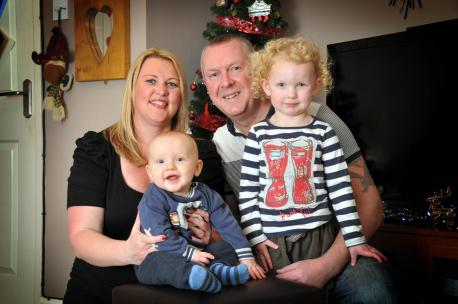

A WINSFORD couple are set for a magical Christmas after defying the odds to give birth to their second miracle baby. Clare Mossford and Chris MacLennan, from Commonwealth Close, had to have fertility treatment after Chris had testicular cancer in 2001. After three failed cycle of IVF at Leighton Hospital the couple were almost ready to give up, but gave it one last shot at CARE Manchester fertility clinic – their final attempt worked and baby Connie Grace was born in January 2011.
“When Chris had his treatment he didn’t freeze any sperm as it’s not something you think about until years later when you want to try for children,” explained Clare.
“I had lost all confidence in everything, we’d had four tries and we had learnt to only take each day as it comes otherwise you will drive yourself mad, so we’d said this would be the last go.
“CARE were amazing, I didn’t think it was real until Connie was in my arms as we’d been through so much heartbreak, but seeing is believing.”
The couple had frozen three embryos, in June 2012 they decided to try for another baby and these were defrosted with Clare and Chris delighted to find two were viable to transfer. Clare gave birth to Reggie George in April this year.
“We couldn't believe our eyes two weeks later that a pregnancy test came up positive again,” she added. “Reggie was frozen for two years, we were over the moon to have a little girl and we certainly didn’t think it would happen again.
“We were ecstatic our family was complete, not only had we been lucky enough to get pregnant twice but went on to have a boy and a girl.
“This year our Christmas is going to be magical with our amazing family of four.”
Frequently Asked Questions
Recommended by Fertility Experts
Conceive Plus Men's Fertility Support
Designed to support healthy sperm production, motility, and overall male reproductive health with clinically studied nutrients.
Shop Now →Can men with testicular cancer preserve fertility through sperm freezing?
Yes, men diagnosed with testicular cancer can preserve their fertility by freezing sperm before undergoing chemotherapy or radiation treatment, which can affect sperm production. The American Society of Reproductive Medicine (ASRM) recommends that all men facing cancer treatment be offered fertility preservation options. Frozen sperm can remain viable for many years, allowing men to pursue biological parenthood after cancer treatment is complete.
What is the success rate of IVF after multiple failed cycles?
While success rates vary based on age, egg quality, and other factors, continuing IVF treatment after failed cycles can still result in pregnancy, though emotional and financial toll should be considered. Studies show that some couples do achieve success on subsequent attempts, particularly when changing fertility clinics or treatment protocols. The ASRM recommends consulting with your fertility specialist about whether additional cycles are medically advisable based on your specific situation.
How long can embryos be safely frozen and stored?
Embryos can be frozen and stored for extended periods, with studies showing that embryos frozen for several years can still result in viable pregnancies when thawed. The FDA and ASRM have not established a maximum time limit for embryo storage, though most fertility clinics require periodic consent renewal. Properly cryopreserved embryos maintain their viability indefinitely, making them a valuable option for families planning future pregnancies.
What factors determine if frozen embryos are viable after thawing?
Embryo viability after thawing depends on the embryo's initial quality at freezing, the cryopreservation method used, and proper storage conditions maintained over time. Modern vitrification techniques have significantly improved thaw survival rates to 90% or higher for quality embryos. Your fertility clinic will assess viability during the thaw process and can only transfer embryos that demonstrate normal development and cellular integrity.
Does insurance cover fertility treatment in the United States?
Insurance coverage for fertility treatment varies significantly by state and insurance plan, with some states mandating coverage while others provide none. Currently, 19 states have fertility insurance mandates, though coverage specifics differ widely regarding which treatments and cycles are covered. It's essential to review your individual insurance policy or contact your provider directly to understand what fertility services, including IVF and embryo freezing, are covered under your plan.
Can you transfer multiple embryos during IVF to increase pregnancy chances?
While transferring multiple embryos may increase the chance of pregnancy, the ASRM recommends single embryo transfer in most cases to reduce the risks associated with multiple pregnancies, including preterm birth and complications. The decision about the number of embryos to transfer should be individualized based on age, embryo quality, and patient preference after thorough counseling. Your fertility specialist will provide recommendations specific to your situation to balance pregnancy success with safety considerations.
What is the difference between fresh and frozen embryo transfer?
Fresh embryo transfer occurs during the same cycle as egg retrieval, while frozen embryo transfer uses embryos that have been cryopreserved and thawed in a subsequent cycle. Both approaches have comparable success rates when using quality embryos, though frozen transfer allows time for uterine preparation and avoids ovarian hyperstimulation syndrome. Many fertility clinics now prefer frozen transfer protocols due to improved outcomes and safety profiles.
Trusted by Couples in Over 70 Countries
Support Male Fertility From the Inside Out
Male fertility is just as important as female fertility in the conception journey. Conceive Plus Men's range delivers targeted nutritional support to promote healthy sperm and overall reproductive wellbeing.
Shop Men's Range →