What Do DPO HCG Levels Reveal About Pregnancy

Trying to get pregnant can be exciting, stressful, and sometimes overwhelming. Understanding DPO HCG levels can make things a little clearer. HCG, also called human chorionic gonadotropin, is a hormone that shows up in the body after implantation. It’s what pregnancy tests detect. This hormone can tell a lot about your pregnancy—like how it’s progressing or if there might be any issues early on [1].
For anyone who’s actively trying to conceive (TTC), knowing how HCG by DPO changes can be super helpful. It’s like getting little clues about what’s happening inside your body. In this article, we’ll dive into DPO HCG levels and why they matter.

What Does DPO HCG Levels Even Mean?
Let’s start with the basics. DPO HCG levels refers to how much HCG is in your blood or urine at specific days past ovulation (DPO). After ovulation, if a fertilized egg implants into the uterus, it starts releasing HCG. This hormone’s job? To tell your body, "Hey, we’re pregnant! Keep the uterine lining in place!"
HCG usually shows up in your blood around 6–12 days after ovulation. For some, that’s when implantation occurs [2]. So, if you’re someone who tracks ovulation and symptoms carefully, you might already be familiar with this timeline.
Top Tip: Some people notice light spotting around 6–12 DPO. This is called implantation bleeding. If you see this, don’t panic! It could be one of the first signs of pregnancy.
Why Is HCG So Important?
HCG isn’t just a random hormone floating around. It plays a huge role in keeping the early stages of pregnancy stable. For starters, it keeps the corpus luteum alive. That’s the part of your ovary that produces progesterone, which keeps the uterine lining thick and ready to support a growing embryo [3].
It also helps develop the placenta. Yep, HCG basically lays the foundation for the organ that will feed and protect your baby. Oh, and let’s not forget—it’s the hormone that home pregnancy tests detect.
As your HCG levels increase, you may start noticing early pregnancy symptoms—these symptoms of HCG levels rising can give you clues about how your pregnancy is progressing.
But here’s the thing: HCG DPO patterns are different for everyone. So don’t freak out if your levels aren’t exactly like someone else’s. What really matters is how those levels rise over time.
How Do HCG Levels Rise by DPO?
In early pregnancy, HCG by DPO typically doubles every 48–72 hours. The key word here is “typically” because, again, everyone’s body is different [4].
Here’s a rough idea of what HCG levels might look like:
- At 9–12 DPO, HCG levels are usually low, somewhere between 5–50 mIU/mL.
- By 12–16 DPO, levels increase rapidly, often exceeding 100 mIU/mL.
- After 16 DPO, HCG keeps rising steadily, doubling every couple of days.
These numbers are just averages. Some people might have higher or lower levels, and that’s okay. What really matters is whether your levels are rising consistently.
If you’re trying to pinpoint ovulation more accurately, using a DPO calculator can help track your cycle and estimate key fertility dates with precision.
Top Tip: If you’re testing at home, waiting until at least 14 DPO can give you more accurate results. Testing too early might show a false negative because HCG levels are still low.

Why Do Doctors Track HCG Levels?
If you’ve ever had a blood test to confirm pregnancy, you’ve probably seen how closely doctors monitor DPO HCG levels. That’s because rising HCG levels are one of the best indicators of a healthy pregnancy in the early weeks.
But here’s where it gets tricky. Low or slow-rising HCG levels could mean a few different things. It might be a sign of late implantation, a miscarriage, or an ectopic pregnancy (where the embryo implants outside the uterus). On the flip side, super high HCG levels could point to multiples (twins or triplets) or, in rare cases, a molar pregnancy (an abnormal growth in the uterus) [5].
Doctors usually focus on the trend—how your levels increase over time—rather than the actual numbers.
Factors That Can Affect HCG Levels
Not everyone’s HCG DPO levels will follow the same pattern, and that’s completely normal. A lot of factors can influence your numbers.
First, the timing of implantation makes a big difference. If the embryo implants later than usual, your HCG levels might start rising later too. This doesn’t mean anything’s wrong—it’s just biology.

✨ Think You Might Be Pregnant?
Get fast, accurate results up to 6 days before your missed period with our early detection pregnancy test.
Shop Now — $9.80✓ Free shipping on orders over $40 | ✓ Trusted by millions of couples worldwide
Second, certain health conditions like PCOS can affect HCG production. People with PCOS often have irregular cycles, which can make it harder to pinpoint DPO and understand HCG trends.
Finally, not all pregnancy tests are created equal. Some tests are more sensitive than others and can detect lower HCG levels [6].
Top Tip: If you’re using a home pregnancy test, choose one that detects levels as low as 10–20 mIU/mL. These are usually labeled as “early detection” tests.
What Do Low HCG Levels Mean?
Low DPO HCG levels aren’t always a bad thing, but they can be a sign that something needs attention. For example, if levels aren’t rising as expected, it could mean:
- Late ovulation or implantation, which might push back your timeline.
- A chemical pregnancy, which is an early loss that happens before the embryo can be seen on an ultrasound.
- An ectopic pregnancy, where the embryo implants outside the uterus.
If your doctor sees low HCG levels, they’ll likely recommend repeating the test in 48 hours to check for a rise. A consistent increase, even if it’s slow, is usually a good sign [7].
What About High HCG Levels?
High HCG DPO levels might seem like great news—and sometimes they are! Higher-than-average levels can mean you’re carrying multiples (like twins or triplets). But it’s not always that straightforward.
In some cases, high HCG levels could point to a molar pregnancy. This is a rare condition where abnormal tissue grows in the uterus instead of a healthy embryo [8]. It’s important to follow up with your doctor to make sure everything is progressing as it should.
Top Tip: Don’t jump to conclusions about high HCG levels. Only an ultrasound can confirm multiples or other conditions.

How Do Doctors Test HCG?
There are two main ways to measure HCG:
- Home Pregnancy Tests check for HCG in urine. They’re convenient and easy to use but not as precise as blood tests.
- Blood Tests measure the exact amount of HCG in your system. These can detect pregnancy earlier and are often used to monitor HCG trends in more detail [9].
Can Nutrition Help with Fertility and Early Pregnancy?
Absolutely. The right nutrients can support reproductive health and improve the chances of a healthy pregnancy. For example:
- Folic acid helps prevent neural tube defects and supports cell division [10].
- Vitamin D boosts hormone regulation and strengthens the immune system.
- CoQ10 protects eggs from oxidative stress and improves their quality.
- Myo-inositol supports ovulation and egg health, especially for people with PCOS.
- L-arginine increases blood flow to reproductive organs, improving implantation chances.
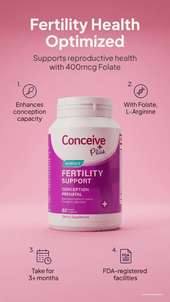
These nutrients are often included in fertility-focused supplements, making it easier to get everything you need in one place.
Top Tip: Pair a balanced diet with fertility supplements to maximize your chances of conceiving and supporting a healthy pregnancy.
Final Thoughts
Understanding DPO HCG levels can give you valuable insights into early pregnancy, helping you track progress and address any concerns early on. While variations are normal, trends in HCG DPO and HCG by DPO are what matter most. Combine this knowledge with proper nutrition and supplements to support your fertility journey and give yourself the best chance at a healthy pregnancy.
Navigating early pregnancy can be challenging, but staying informed will help you feel more confident and in control.
FAQs
What should DPO HCG levels be to confirm pregnancy?
At 14 DPO, HCG levels are usually above 50 mIU/mL, but trends over time are more important than a single number.
How quickly should HCG levels double?
In the first few weeks of pregnancy, HCG levels typically double every 48–72 hours.
Can low HCG levels still mean a healthy pregnancy?
Yes, as long as levels are rising consistently, even if they start low, the pregnancy can still be healthy.
When should I see a doctor about HCG levels?
If HCG levels are dropping, rising very slowly, or significantly outside the normal range, consult your doctor.
Are high HCG levels always a sign of twins?
Not necessarily. While high levels can indicate multiples, they could also mean a miscalculated conception date or other factors.
Citations
- Cole LA. The hCG assay or pregnancy test. Clin Chem Lab Med. Available at: https://pubmed.ncbi.nlm.nih.gov/22149742/
- Berkowitz RS, Goldstein DP. Gestational trophoblastic disease. Cancer. Available at: https://pubmed.ncbi.nlm.nih.gov/8635004/
- Nyberg DA, Mack LA, Laing FC, Jeffrey RB. Early pregnancy complications: endovaginal sonographic findings correlated with human chorionic gonadotropin levels. Radiology. Available at: https://pubmed.ncbi.nlm.nih.gov/3283831/
- Pittaway DE, Reish RL, Wentz AC. Doubling times of human chorionic gonadotropin increase in early viable intrauterine pregnancies. Am J Obstet Gynecol. Available at: https://pubmed.ncbi.nlm.nih.gov/2408475/
- Barnhart KT, Guo W, Cary MS, Morse CB, Chung K, Takacs P, Senapati S, Sammel MD. Differences in Serum Human Chorionic Gonadotropin Rise in Early Pregnancy by Race and Value at Presentation. Obstet Gynecol. Available at: https://pubmed.ncbi.nlm.nih.gov/27500326/
- Practice Committee of the American Society for Reproductive Medicine. Definitions of infertility and recurrent pregnancy loss: a committee opinion. Fertil Steril. Available at: https://pubmed.ncbi.nlm.nih.gov/23095139/
- Turesheva A, Aimagambetova G, Ukybassova T, Marat A, Kanabekova P, Kaldygulova L, Amanzholkyzy A, Ryzhkova S, Nogay A, Khamidullina Z, Ilmaliyeva A, Almawi WY, Atageldiyeva K. Recurrent Pregnancy Loss Etiology, Risk Factors, Diagnosis, and Management. Fresh Look into a Full Box. J Clin Med. Available at: https://pmc.ncbi.nlm.nih.gov/articles/PMC10298962/
- Braga A, Paiva G, Barcellos M, Elias KM, Horowitz NS, Berkowitz RS. Diagnosis and Management of Molar Pregnancies. Hematol Oncol Clin North Am. Available at: https://pubmed.ncbi.nlm.nih.gov/39242292/
- Homan, Gillian et al. Human chorionic gonadotropin as a predictor of outcome in assisted reproductive technology pregnancies. Fertility and Sterility. Available at: https://www.fertstert.org/article/S0015-0282(99)00512-9/fulltext
- Tamura T, Picciano MF. Folate and human reproduction. Am J Clin Nutr. Available at: https://pubmed.ncbi.nlm.nih.gov/16685040/
Buy pregnancy tests online at Conceive Plus, the fertility brand helping women to get pregnant naturally. When trying to get pregnant Conceive Plus is the best pregnancy test to order because it provides fast early results. Premium quality pregnancy tests available online today with fast shipping!
🌱 Get Answers Early
Millions of women trust Conceive Plus for their fertility journey. Clinically validated pregnancy tests delivered to your door.
Shop Pregnancy Tests →Frequently Asked Questions
Recommended by Fertility Experts
Conceive Plus Fertility Lubricant
Specially formulated to be sperm-friendly and isotonic, supporting your natural conception journey without disrupting the reproductive environment.
Shop Now →Q: What DPO does HCG rise?
A: HCG typically begins to rise around 6-8 days after ovulation (DPO), which is when implantation occurs. However, HCG levels are usually too low to detect on home pregnancy tests until 10-14 DPO, which is why the American Society for Reproductive Medicine (ASRM) recommends waiting until at least the first day of a missed period for the most accurate results. HCG doubles approximately every 48-72 hours in early pregnancy, with levels reaching detectable amounts (25 mIU/mL) by 12-14 DPO in most pregnancies. Some women may see faint lines on sensitive tests as early as 8-10 DPO, but this varies significantly based on individual implantation timing and hormone production. For the most reliable confirmation, testing on the first day of a missed period provides accuracy rates of 99% or higher.
Q: What are normal HCG levels by DPO?
A: HCG levels vary widely between individuals, but general guidelines show: at 10 DPO, levels typically range from 5-50 mIU/mL; at 12 DPO, 10-150 mIU/mL; at 14 DPO, 25-200 mIU/mL; and by 21 DPO, levels reach 1,500-5,000 mIU/mL. It's important to note that these ranges are wide because implantation timing and individual hormone production vary significantly among women. Rather than comparing your specific numbers to others, healthcare providers focus on whether HCG is doubling appropriately and following an expected progression curve. A single HCG measurement is less informative than tracking how your levels change over several days through blood tests ordered by your healthcare provider. If you're concerned about your HCG levels, consult with your doctor rather than relying solely on home test results or online comparisons.
Q: Can HCG levels indicate multiple pregnancies?
A: Yes, abnormally high HCG levels for your DPO can suggest multiple pregnancies, as each embryo produces its own HCG. Women carrying twins typically have HCG levels that are approximately 30-50% higher than singleton pregnancies at the same DPO, though there's significant overlap and variation. According to current US fertility statistics, about 3.3% of births are multiples, and HCG testing alone cannot definitively confirm multiples—ultrasound at 6-7 weeks is the gold standard for confirmation. However, unusually elevated HCG levels warrant follow-up with your healthcare provider to investigate further. Supporting your body during early pregnancy with proper nutrition and prenatal supplementation, like those found in Conceive Plus prenatal formulas, becomes especially important in multiple pregnancies due to increased nutritional demands.
Q: What does low HCG at a certain DPO mean?
A: Low HCG levels for your DPO can indicate several possibilities, including miscalculated ovulation date, slower-than-typical hormone production, or potential complications such as ectopic pregnancy or miscarriage risk. A single low HCG reading is not diagnostic on its own; healthcare providers typically order repeat blood tests 48 hours later to assess whether HCG is rising appropriately. If HCG doubles as expected, the pregnancy may simply have slower initial hormone production, which often results in perfectly healthy outcomes. If HCG fails to rise or declines, this may indicate a nonviable pregnancy, and your doctor will recommend additional testing and monitoring. Rather than worrying based on early numbers, focus on supporting your overall health with proper prenatal care and supplementation during this critical window.
Q: Is HCG testing more accurate than home pregnancy tests?
A: Blood tests (quantitative HCG) are more sensitive and accurate than home urine pregnancy tests, particularly in early pregnancy and for tracking hormone progression. Quantitative blood tests can detect HCG levels as low as 1-2 mIU/mL, while most home pregnancy tests require 20-25 mIU/mL for detection. However, blood tests require a healthcare provider's order and results take longer, whereas home tests provide immediate results and are 99% accurate when used after a missed period. The FDA-approved home pregnancy tests available in the US are highly reliable when used according to instructions, especially on the first day of a missed period or later. For women who need confirmation of pregnancy viability or want to track hormone progression, blood HCG testing ordered by a healthcare provider offers the most detailed clinical information.
Trusted by Couples in Over 70 Countries
Start Your Fertility Journey With the Right Support
Conceive Plus Fertility Lubricant is specially formulated to be compatible with sperm, eggs, and embryos. Whether you are just starting out or have been trying for a while, our products are designed to work with your body — not against it.
Explore Fertility Lubricant →