Infertilité inexpliquée : ce que cela signifie, comment y faire face et les prochaines étapes possibles


Infertilité inexpliquée : ce que cela signifie, comment faire face, et ce que vous pouvez faire ensuite
Recevoir un diagnostic d’« infertilité inexpliquée » peut être l’un des moments les plus déstabilisants d’un parcours de fertilité. Vous avez passé les tests. Vous avez eu les rendez-vous. Vous et votre partenaire avez fait des prises de sang, évalué vos taux hormonaux, examiné votre anatomie — et pourtant, la réponse que vous obtenez est essentiellement : nous ne savons pas. Pas de trompes bouchées, pas de faible nombre de spermatozoïdes, pas de déséquilibre hormonal. Juste… rien. Un haussement d’épaules médical enveloppé dans un langage clinique.
Mais voici ce qu'il est important de comprendre : l'infertilité inexpliquée n'est pas une impasse. Ce n'est pas une condamnation. Et elle est bien plus courante que la plupart des gens ne le pensent. Des millions de couples dans le monde reçoivent ce diagnostic chaque année, et beaucoup d'entre eux parviennent à concevoir — naturellement, avec des changements de mode de vie, ou avec un soutien médical ciblé.
Ce guide vous explique tout ce que vous devez savoir sur l'infertilité inexpliquée : ce que cela signifie réellement d'un point de vue clinique, comment elle est diagnostiquée, la réalité émotionnelle de la vivre, les options de traitement fondées sur des preuves, le rôle des compléments de fertilité, et quand consulter un spécialiste.
Qu'est-ce que l'infertilité inexpliquée ?
L'infertilité inexpliquée — aussi appelée infertilité idiopathique — est définie comme l'incapacité à concevoir après 12 mois de rapports réguliers et non protégés (ou 6 mois si la femme a plus de 35 ans), malgré des résultats normaux aux examens standards de fertilité.
Ces examens standards comprennent généralement :
- Test de la réserve ovarienne — AMH (hormone anti-müllérienne), comptage des follicules antraux (AFC) et dosages de FSH/estradiol au jour 3
- Confirmation de l'ovulation — par test de progestérone en phase lutéale ou méthodes de suivi
- Évaluation de la perméabilité tubaire — hystérosalpingographie (HSG) ou laparoscopie pour exclure une obstruction des trompes de Fallope
- Analyse du sperme — évaluation du nombre, de la motilité et de la morphologie des spermatozoïdes selon les valeurs de référence de l'OMS
- Évaluation utérine — échographie ou hystéroscopie pour exclure les fibromes, polypes ou anomalies structurelles
Lorsque tous ces résultats sont dans les paramètres normaux, le diagnostic devient infertilité inexpliquée. C'est, en essence, un diagnostic d'exclusion — défini non pas par ce qui est trouvé, mais par ce qui n'est pas.
Cela peut être profondément insatisfaisant. La plupart des gens s'attendent à ce qu'après des tests approfondis, il y ait une réponse claire — un problème à résoudre, un traitement à suivre. L'absence d'une explication concrète peut laisser les couples se sentir impuissants, confus, voire rejetés par le système médical.
Mais ce diagnostic ne signifie pas qu'il n'y a rien qui cloche. Il signifie que les tests standards actuels n'ont pas identifié la cause. Il y a une distinction importante ici : les outils que nous utilisons pour évaluer la fertilité, bien qu'efficaces, ne sont pas parfaits. Il existe des contributeurs connus à l'infertilité — des problèmes subtils de qualité des ovules, la fragmentation de l'ADN spermatique, des facteurs d'implantation, des réponses immunitaires — qui ne sont pas détectés par les évaluations de routine.
Quelle est la fréquence de l'infertilité inexpliquée ?
L'infertilité inexpliquée est loin d'être rare. Les estimations de recherche suggèrent qu'elle représente environ 25 à 30 % de tous les diagnostics d'infertilité, ce qui en fait l'une des catégories les plus courantes aux côtés des dysfonctionnements ovulatoires et de l'infertilité masculine.
Selon l'American Society for Reproductive Medicine (ASRM), environ 1 couple sur 8 aux États-Unis — soit environ 7,4 millions de personnes — connaît une infertilité à un moment donné. Parmi eux, une proportion importante recevra un diagnostic inexpliqué. Une revue systématique de 2012 publiée dans Human Reproduction Update estimait que l'infertilité inexpliquée affecte entre 10 % et 30 % des couples cherchant une évaluation de fertilité, avec des variations selon la définition large de « infertilité » et les investigations incluses.
La prévalence augmente également avec l'âge. Bien que l'infertilité inexpliquée puisse toucher n'importe qui, les couples dont la partenaire féminine a plus de 35 ans sont statistiquement plus susceptibles de recevoir ce diagnostic. Ce n'est pas parce que les tests deviennent moins fiables, mais parce que des changements subtils liés à l'âge dans la qualité des ovules et la fonction ovarienne peuvent être présents sans encore franchir les seuils cliniques détectables par les tests standards.
Soutenir votre parcours de fertilité
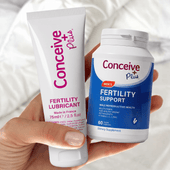
Lorsque le diagnostic est inexpliqué, un soutien nutritionnel adapté peut faire une réelle différence. Conceive Plus Women's Fertility Support fournit des micronutriments clés — notamment de l'acide folique, du CoQ10 et des antioxydants — spécialement formulés pour soutenir la santé reproductive.
Découvrez le soutien à la fertilité féminine →Les causes cachées derrière le diagnostic
Le terme « inexpliqué » est un peu trompeur, car dans de nombreux cas, les chercheurs en fertilité et les endocrinologues de la reproduction ont des théories solides sur ce qui pourrait se passer — le défi est simplement que les facteurs sous-jacents existent en dessous du seuil de détection des outils cliniques standards, ou nécessitent des tests plus spécialisés qui ne font pas encore partie des soins de routine.
Voici quelques-uns des contributeurs potentiels les mieux étayés à l'infertilité inexpliquée :
Fragmentation de l'ADN spermatique
Une analyse de sperme standard mesure le nombre de spermatozoïdes, leur mobilité (mouvement) et leur morphologie (forme) — mais ne renseigne pas sur l’intégrité du matériel génétique à l’intérieur. La fragmentation de l’ADN spermatique désigne des cassures ou des dommages dans les brins d’ADN des spermatozoïdes. Des niveaux élevés de fragmentation peuvent nuire à la fécondation, réduire la qualité de l’embryon et augmenter le risque de fausse couche — tout cela sans anomalie apparente lors d’une analyse de sperme de routine.
Des études publiées dans des revues telles que Fertility and Sterility ont trouvé des taux élevés de fragmentation de l’ADN chez une proportion significative d’hommes ayant par ailleurs des paramètres spermatiques normaux. En cas d’infertilité inexpliquée suspectée, un test de fragmentation de l’ADN spermatique (SCSA ou test TUNEL) peut valoir la peine d’être réalisé.
Problèmes subtils de qualité ovocytaire
Les tests de réserve ovarienne comme l’AMH et l’AFC indiquent combien d’ovules une femme a à disposition — mais ils ne renseignent pas directement sur la qualité des ovules. Avec l’âge, la proportion d’ovules présentant des anomalies chromosomiques augmente significativement. Cela peut affecter les taux de fécondation, le développement embryonnaire et le succès de l’implantation sans signe évident dans les tests standards.
Des recherches publiées dans le New England Journal of Medicine et d’autres revues ont démontré que l’aneuploïdie ovocytaire (erreurs chromosomiques) augmente fortement après 35 ans, ce qui est largement considéré comme un facteur principal de l’infertilité inexpliquée liée à l’âge.
Endométriose
L’endométriose — tissu similaire à la muqueuse utérine se développant en dehors de l’utérus — est notoirement sous-diagnostiquée. Une endométriose légère à modérée peut ne pas provoquer de douleurs évidentes et ne se manifeste pas toujours à l’imagerie. Elle ne peut être diagnostiquée de manière définitive que par laparoscopie. Des études suggèrent que l’endométriose pourrait être présente chez jusqu’à 50 % des femmes souffrant d’infertilité inexpliquée, avec des effets inflammatoires subtils qui altèrent la qualité des ovules, la fécondation et l’implantation.
Fécondation et développement embryonnaire altérés
Certains couples produisent des ovules et des spermatozoïdes apparemment normaux, mais le processus de fécondation ou le développement embryonnaire précoce est inefficace ou échoue complètement. Ces problèmes ne deviennent apparents qu’en FIV, lorsque les embryologistes peuvent observer directement la fécondation et la qualité de l’embryon.
Défauts de la phase lutéale
La phase lutéale — la seconde moitié du cycle menstruel — est celle où la progestérone augmente pour préparer la muqueuse utérine à l’implantation. Des défauts subtils dans la production de progestérone ou la réceptivité endométriale peuvent empêcher une implantation réussie même en présence d’un embryon viable. Diagnostiquer ces défauts de manière fiable reste un défi clinique.
Facteurs immunitaires et inflammatoires
Les recherches émergentes pointent de plus en plus vers une dysrégulation immunitaire comme facteur de l’infertilité inexpliquée. Une activité anormale des cellules tueuses naturelles (NK), des anticorps antiphospholipides et une inflammation systémique peuvent interférer avec l’implantation. Bien que le dépistage de ces facteurs ne soit pas encore standard, il est de plus en plus disponible dans les cliniques spécialisées.
L’impact émotionnel de l’infertilité inexpliquée
Alors qu’une grande partie des discussions médicales se concentre sur les dimensions physiologiques de l’infertilité inexpliquée, les dimensions psychologiques et émotionnelles sont tout aussi — voire plus — importantes pour les couples qui la vivent.
Les recherches montrent de manière constante que l’infertilité génère des niveaux de stress psychologique comparables à ceux rapportés par des patients atteints de maladies chroniques graves. Une étude de 2010 publiée dans Fertility and Sterility a révélé que les femmes infertiles présentaient des taux de dépression et d’anxiété significativement plus élevés que la population générale. Et un diagnostic inexpliqué peut amplifier ces sentiments de manière unique.
L’absence de cause claire peut être plus angoissante qu’un diagnostic connu. Lorsqu’aucun problème identifiable n’est trouvé, il n’y a pas non plus de cible claire pour le traitement, pas de plan définitif, ni de garantie que quoi que ce soit changera la situation. Cette ambiguïté est profondément difficile pour beaucoup.
Les expériences émotionnelles courantes rapportées par les personnes confrontées à une infertilité inexpliquée incluent :
- Deuil et perte — pleurer la grossesse qui n’a pas eu lieu et le calendrier qui a changé
- Auto-culpabilisation et culpabilité — se demander si des choix de vie, des décisions passées ou des échecs personnels en sont la cause
- Tensions dans le couple — des styles émotionnels de gestion différents entre partenaires peuvent créer des tensions et de la distance
- Isolement social — éviter les annonces de grossesse des amis, les baby showers et les conversations sur les enfants
- Anxiété médicale — développer une relation compliquée et à enjeux élevés avec le suivi de la fertilité et les rendez-vous médicaux
- Perte d’identité — lorsque fonder une famille est un objectif de vie central, l’infertilité inexpliquée peut ébranler le sentiment de soi
Il est essentiel de reconnaître que ces réactions émotionnelles sont normales, valides et méritent un soutien. Chercher un accompagnement psychologique — individuellement ou en couple — n’est pas un signe de faiblesse ; c’est une forme de soin actif de soi qui peut améliorer significativement le bien-être pendant une période difficile. De nombreuses cliniques de fertilité disposent de psychologues internes ou peuvent orienter vers des spécialistes qui comprennent les défis uniques de l’infertilité.
Les groupes de soutien — en présentiel comme en ligne — peuvent également être inestimables. Se connecter avec d'autres personnes qui comprennent vraiment l'expérience de l'infertilité inexpliquée peut réduire l'isolement et offrir un soutien pratique, émotionnel et communautaire.
Changements de mode de vie qui peuvent faire la différence
Bien que l'infertilité inexpliquée n'ait pas de cause unique, les preuves montrent de manière constante que l'optimisation du mode de vie peut améliorer significativement les résultats reproductifs. Les changements suivants sont soutenus par des recherches évaluées par des pairs et recommandés par des spécialistes de la santé reproductive.
Atteignez et maintenez un poids santé
Le poids corporel influence significativement la fertilité chez les deux partenaires. Chez les femmes, un excès de masse grasse peut perturber l'équilibre hormonal et l'ovulation par une élévation des niveaux d'œstrogènes et une résistance à l'insuline. Les femmes en insuffisance pondérale peuvent également souffrir d'anovulation (absence d'ovulation). Une revue de 2018 dans Reproductive Biology and Endocrinology a montré qu'une perte de poids même modeste chez les femmes en surpoids avec infertilité inexpliquée améliorait les taux de conception. Chez les hommes, l'obésité est associée à une baisse de testostérone, une qualité de sperme moindre et une élévation de la température scrotale pouvant nuire à la spermatogenèse.
Optimisez votre alimentation
Le « régime fertilité » — riche en céréales complètes, bonnes graisses, protéines végétales, légumes, et pauvre en glucides raffinés et en gras trans — a été associé à une amélioration des taux de conception dans des études épidémiologiques comme celle des infirmières de Harvard et d'autres. Les composants clés de l'alimentation pour la santé reproductive incluent :
- Folate/acide folique — essentiel pour une division cellulaire saine et le développement du tube neural
- Acides gras oméga-3 — présents dans les poissons gras, les graines de lin et les noix ; ils soutiennent l'équilibre hormonal et la qualité des ovules
- Antioxydants — les vitamines C et E, le CoQ10, le sélénium et le zinc protègent les cellules reproductrices des dommages causés par le stress oxydatif
- Fer — une carence en fer peut perturber l'ovulation ; le fer non héminique provenant de sources végétales montre un bénéfice particulier
- Vitamine D — une carence a été associée à une fertilité altérée dans plusieurs études ; beaucoup de personnes nécessitent une supplémentation
Faites de l'exercice de manière réfléchie
Une activité physique modérée et régulière favorise un poids sain, réduit le stress et améliore la sensibilité à l'insuline — autant de facteurs bénéfiques pour la fertilité. Cependant, un exercice excessif ou intense peut perturber l'axe hypothalamo-hypophyso-ovarien et supprimer l'ovulation. Visez 150 minutes d'activité modérée par semaine, en évitant les entraînements d'endurance extrêmes pendant les tentatives actives de conception.
Réduisez la consommation d'alcool et arrêtez de fumer
La consommation d’alcool — même à des niveaux modérés — a été associée à une réduction de la fertilité chez les deux sexes. Une grande étude de cohorte danoise a révélé que les femmes consommant 14 verres ou plus par semaine mettaient significativement plus de temps à concevoir. Le tabagisme est lié à une réserve ovarienne réduite, une qualité ovocytaire moindre et une accélération de l’épuisement folliculaire chez les femmes, ainsi qu’à une fragmentation accrue de l’ADN et une motilité spermatozoïde réduite chez les hommes. Arrêter de fumer est l’un des changements les plus impactants et positifs pour la fertilité que chaque partenaire peut faire.
Gérer le stress
Le stress psychologique chronique active l’axe HPA, augmentant les niveaux de cortisol qui peuvent perturber les hormones reproductives. Bien que la relation entre stress et infertilité soit complexe et bidirectionnelle (l’infertilité cause du stress, et le stress peut aggraver la fertilité), les preuves soutiennent que la réduction du stress est bénéfique. Les programmes de réduction du stress basés sur la pleine conscience (MBSR) ont montré des résultats prometteurs pour réduire l’anxiété et améliorer la qualité de vie des couples infertiles, et certaines études suggèrent une amélioration des taux de conception.
Limiter l’exposition aux toxines
Les toxines environnementales — notamment le bisphénol A (BPA) dans les plastiques, les phtalates dans les produits de soins personnels, les pesticides et les métaux lourds — sont des perturbateurs endocriniens pouvant interférer avec la fonction hormonale reproductive. Bien qu’il soit impossible d’éviter toutes les expositions, réduire l’utilisation de contenants alimentaires en plastique, choisir des produits biologiques lorsque c’est possible, et opter pour des produits de soins personnels à étiquette propre sont des mesures raisonnables et soutenues par des preuves.
Compléments de fertilité pouvant aider
Lorsque le diagnostic est une infertilité inexpliquée, le soutien nutritionnel devient un outil puissant et fondé sur des preuves. Parce que la cause est inconnue, une approche à large spectre qui optimise les principales voies micronutritionnelles impliquées dans la reproduction a un sens scientifique solide.
Voici les compléments les plus étudiés et cliniquement pertinents pour l’infertilité inexpliquée :
Coenzyme Q10 (CoQ10)
La CoQ10 est un antioxydant liposoluble et un cofacteur mitochondrial qui joue un rôle central dans la production d’énergie cellulaire. Les ovules et les spermatozoïdes nécessitent tous deux une fonction mitochondriale exceptionnelle — les ovules en particulier ont besoin de grandes quantités d’ATP pour le processus énergivore de la fécondation et du développement embryonnaire précoce.
Un essai contrôlé randomisé publié dans le Journal of Urology a révélé que la supplémentation en CoQ10 améliorait significativement la motilité des spermatozoïdes et les taux de fécondation chez les hommes souffrant d'infertilité inexpliquée. Chez les femmes, une étude majeure de 2015 dans Aging Cell menée par des chercheurs dont le Dr Robert Casper a démontré que la CoQ10 (sous forme d’ubiquinol) améliorait la qualité des ovules chez des souris âgées — des résultats qui ont depuis soutenu des essais cliniques chez l’humain montrant une meilleure réponse ovarienne et une qualité ovocytaire améliorée, en particulier chez les femmes avec une réserve ovarienne diminuée.
Folates méthylés (5-MTHF)
Le folate est essentiel à la synthèse de l’ADN, à la division cellulaire et à la méthylation — tous des processus cruciaux dans le développement des ovules et des spermatozoïdes. L’acide folique standard nécessite une conversion en sa forme active (5-MTHF) par l’enzyme MTHFR. Une variante génétique courante signifie que jusqu’à 40 % des personnes ont une activité réduite de la MTHFR, limitant leur capacité à utiliser l’acide folique. La supplémentation en folate méthylé (5-méthyltétrahydrofolate) contourne cette limitation et assure une distribution efficace aux tissus reproducteurs.
Inositol (Myo-Inositol et D-Chiro-Inositol)
Les composés d’inositol — en particulier le ratio 40:1 de myo-inositol à D-chiro-inositol — bénéficient de preuves solides soutenant leur utilisation chez les femmes atteintes de SOPK et de dysfonction ovulatoire. Des recherches émergentes appuient également leur usage pour améliorer la qualité des ovules et la réponse ovarienne de manière plus générale. Une revue de 2016 dans European Review for Medical and Pharmacological Sciences a montré que la supplémentation en inositol améliorait à la fois la qualité des ovocytes et le développement embryonnaire chez les patientes en FIV.
Vitamine D
Les récepteurs de la vitamine D se trouvent dans tout le système reproducteur — dans les follicules ovariens, la muqueuse utérine et les spermatozoïdes. La carence est très répandue et a été associée à une fertilité réduite, de mauvais résultats en FIV et un risque accru de fausse couche. Une méta-analyse de 2019 dans Human Reproduction a trouvé une association significative entre une suffisance en vitamine D et des taux de naissance vivante plus élevés lors de cycles de FIV.
N-Acétyl Cystéine (NAC)
Le NAC est un précurseur du glutathion — l’antioxydant le plus puissant de l’organisme. Il a montré des bénéfices dans la réduction du stress oxydatif dans les systèmes reproducteurs masculin et féminin. Un essai randomisé publié dans Fertility and Sterility a révélé que la supplémentation en NAC améliorait les taux d’ovulation chez les femmes souffrant d’infertilité inexpliquée et de SOPK.
Zinc et sélénium
Le zinc est essentiel à la synthèse de la testostérone, à la formation des spermatozoïdes et à l’équilibre hormonal féminin. Le sélénium est nécessaire à la maturation des spermatozoïdes et possède des propriétés antioxydantes chez les deux sexes. Plusieurs études soutiennent le rôle de ces minéraux dans l’amélioration des paramètres du sperme et le soutien de la qualité des ovules, en faisant des composants clés de tout régime de suppléments axé sur la fertilité.
Acides gras oméga-3 (DHA/EPA)
Le DHA est un composant structurel des membranes des spermatozoïdes et participe à la réaction acrosomale — l’étape cruciale où le spermatozoïde pénètre l’ovule. Chez les femmes, les oméga-3 soutiennent l’équilibre hormonal et réduisent l’inflammation systémique. Une étude de 2018 publiée dans JCEM a montré qu’une consommation plus élevée d’oméga-3 était associée à une amélioration de la morphologie et du nombre de spermatozoïdes.
Conceive Plus Soutien à la Fertilité Féminine réunit de nombreux nutriments appuyés par des preuves scientifiques — y compris le folate actif (5-MTHF), le CoQ10 sous sa forme bio-disponible ubiquinol, les vitamines D3, C et E, le zinc, le sélénium, et plus encore — dans une formulation spécialement conçue pour optimiser la santé reproductive féminine avant et pendant les tentatives de conception.
Options de traitement médical pour l'infertilité inexpliquée
Selon l'âge du couple, la durée de l'infertilité et les circonstances individuelles, les spécialistes de la fertilité peuvent recommander une ou plusieurs des voies de traitement suivantes pour l'infertilité inexpliquée.
Gestion expectante (attente active)
Pour les couples plus jeunes qui essaient depuis moins de deux ans, la gestion expectante — optimiser activement le mode de vie, la nutrition et la prise de suppléments tout en continuant à essayer naturellement — est souvent une première étape raisonnable. Les données de recherche suggèrent qu'une proportion significative de couples avec infertilité inexpliquée (en particulier ceux de moins de 35 ans) concevront dans les 24 à 36 mois sans intervention.
Une étude de 2012 menée par Snick et al. dans Human Reproduction a révélé que les couples souffrant d'infertilité inexpliquée avaient un taux cumulé de conception d'environ 72 % sur 36 mois sans traitement. Cela ne signifie pas que l'intervention doit être retardée indéfiniment — mais cela soutient une approche active et fondée sur des preuves pour optimiser la conception naturelle avant d'escalader.
Stimulation ovarienne avec insémination intra-utérine (IUI)
L'IUI consiste à préparer et concentrer les spermatozoïdes en laboratoire, puis à les déposer directement dans l'utérus au moment de l'ovulation — contournant ainsi certaines des barrières naturelles à la fécondation. Lorsqu'elle est combinée à une stimulation ovarienne légère par médicaments oraux (citrate de clomifène ou létrozole), les taux de réussite de l'IUI par cycle varient d'environ 8 à 15 % pour l'infertilité inexpliquée.
Un essai majeur de 2006 publié dans NEJM comparant l'IUI avec et sans stimulation aux cycles non stimulés a montré que l'IUI stimulée offrait des améliorations modestes mais significatives des taux de conception pour l'infertilité inexpliquée. L'IUI est relativement peu coûteuse, peu invasive, et constitue une étape logique d'escalade.
Fécondation In Vitro (FIV)
La FIV est à la fois un traitement et un outil diagnostique pour l'infertilité inexpliquée. En facilitant la fécondation en laboratoire, la FIV contourne plusieurs barrières potentielles — facteurs cervicaux, transport à travers la trompe de Fallope, le processus de fécondation lui-même — et permet aux embryologistes d'observer directement les taux de fécondation et la qualité des embryons.
Les taux de réussite de la FIV varient considérablement selon l'âge. Selon les données les plus récentes du CDC sur les taux de réussite des techniques de procréation assistée (TPA), les taux moyens de naissance vivante par cycle de prélèvement sont d'environ 50 à 55 % pour les femmes de moins de 35 ans, diminuant à environ 38 % pour les 35-37 ans, et encore plus pour les patientes plus âgées. Pour l'infertilité inexpliquée en particulier, les résultats de la FIV ont tendance à être plus favorables que pour certains autres diagnostics, puisque le mécanisme fondamental de la reproduction est globalement intact.
Les avancées telles que le diagnostic génétique préimplantatoire (PGT-A) — qui dépiste les anomalies chromosomiques des embryons avant le transfert — ont amélioré les taux de réussite et réduit le risque de fausse couche, en particulier pour les couples avec des échecs d'implantation récurrents ou des partenaires féminines plus âgées.
FIV avec ICSI
L'injection intracytoplasmique de spermatozoïdes (ICSI) consiste à injecter un seul spermatozoïde directement dans un ovule, et est utilisée lorsque les taux de fécondation sont anormalement bas avec la FIV standard. Pour les couples suspectés de fragmentation de l'ADN spermatique, l'ICSI peut être combinée avec l'IMSI (injection intracytoplasmique de spermatozoïdes morphologiquement sélectionnés), qui utilise une microscopie à fort grossissement pour sélectionner les spermatozoïdes de meilleure qualité.
Test de réceptivité endométriale
Le test d'array de réceptivité endométriale (ERA) — développé par l'équipe d'IGENOMIX — peut déterminer si la muqueuse utérine est réceptive pendant la fenêtre standard d'implantation, ou si le moment du transfert embryonnaire doit être personnalisé. Pour les couples ayant subi plusieurs échecs répétés de transfert en FIV, le test ERA a montré des résultats prometteurs en améliorant les taux d'implantation grâce à un timing précis de la « fenêtre d'implantation ».
Quand faut-il consulter un spécialiste ?
Savoir quand passer du suivi par un médecin généraliste à une prise en charge spécialisée en reproduction est une étape importante pour gérer efficacement l'infertilité inexpliquée. Bien que le parcours varie pour chaque couple, les lignes directrices fondées sur des preuves suivantes peuvent aider à cadrer cette décision.
Seuils standards d'orientation
- Moins de 35 ans : Demander une évaluation après 12 mois de rapports réguliers non protégés sans conception
- 35–40: Demander une évaluation après 6 mois
- Plus de 40 ans : Demander une évaluation immédiatement ou au plus tard après 3 mois
- Facteurs de risque connus : Cycles irréguliers, antécédents de maladie inflammatoire pelvienne, endométriose, chirurgie antérieure, chimiothérapie ou grossesse extra-utérine précédente justifient une orientation plus précoce quel que soit l'âge
Quand demander un second avis ou consulter un sous-spécialiste
Si vous avez été évalué et avez reçu un diagnostic d'infertilité inexpliquée mais que vous estimez que l'évaluation était incomplète — par exemple, si les tests de fragmentation de l'ADN spermatique, l'ERA ou la laparoscopie pour l'endométriose n'ont pas été proposés — il est tout à fait raisonnable de demander un second avis auprès d'un endocrinologue de la reproduction (REI) ou d'un spécialiste de la fertilité disposant d'une expertise en sous-spécialité.
Lors du choix d'une clinique, pensez à demander :
- Leur expérience et leurs taux de réussite en cas d'infertilité inexpliquée
- S'ils proposent des tests avancés (fragmentation de l'ADN, ERA, panels immunitaires)
- Accès aux services de soutien psychologique
- Transparence sur les taux de naissances vivantes en FIV, stratifiés par âge
Perspectives internationales et cliniques
Les directives NICE (Institut national britannique pour la santé et l’excellence des soins) recommandent de proposer une insémination intra-utérine (IIU) avec stimulation ovarienne aux femmes souffrant d’infertilité inexpliquée qui n’ont pas conçu après deux ans de rapports réguliers non protégés. L’ASRM soutient également de passer de la gestion expectante à l’IIU après 6 mois chez les couples avec infertilité inexpliquée dont la partenaire est âgée de moins de 35 ans, et plus tôt pour les plus âgées.
FAQ : Infertilité inexpliquée
Q1 : L’infertilité inexpliquée signifie-t-elle que je ne tomberai jamais enceinte ?
Non. Beaucoup de couples avec une infertilité inexpliquée conçoivent, naturellement ou avec traitement. Les études montrent que sans intervention, 72 % des couples de moins de 35 ans avec infertilité inexpliquée concevront dans les 36 mois. Avec traitement, les taux de réussite peuvent être considérablement plus élevés. L’infertilité inexpliquée n’est pas une barrière permanente ou définitive à la parentalité.
Q2 : Dois-je faire plus d’examens si mon diagnostic est d’infertilité inexpliquée ?
Cela dépend des examens déjà réalisés. Si les investigations standard (analyse du sperme, confirmation de l’ovulation, évaluation tubaire, réserve ovarienne) ont toutes été effectuées, certains couples peuvent bénéficier d’examens complémentaires : fragmentation de l’ADN spermatique, évaluation de la réceptivité endométriale, laparoscopie pour endométriose occulte ou profilage immunitaire. Discutez de ces options avec un endocrinologue de la reproduction, surtout si les traitements standards n’ont pas fonctionné.
Q3 : Les changements de mode de vie peuvent-ils réellement faire une différence en cas d’infertilité inexpliquée ?
Oui, de manière significative. La gestion du poids, l’amélioration de l’alimentation, l’arrêt du tabac, la réduction de l’alcool, la gestion du stress et l’optimisation de l’apport en micronutriments ont tous été associés à une amélioration des résultats de fertilité dans des recherches évaluées par des pairs. Ce ne sont pas seulement des mesures à effet placebo ; elles ciblent de véritables voies physiologiques impliquées dans la reproduction.
Q4 : Les compléments de fertilité aident-ils vraiment en cas d’infertilité inexpliquée ?
Pour beaucoup de personnes, oui. Des compléments comme le CoQ10, le folate méthylé, la vitamine D, les acides gras oméga-3, le zinc et le sélénium ont des preuves soutenant leur rôle dans l’amélioration de la qualité des ovules, de la santé du sperme, de l’équilibre hormonal et de la fonction reproductive globale. Ils sont particulièrement pertinents lorsque la cause de l’infertilité est inconnue, car ils comblent simultanément plusieurs carences potentielles en micronutriments.
Q5 : Les deux partenaires doivent-ils prendre des compléments de fertilité ?
Oui. La fertilité est un effort biologique partagé. La qualité du sperme — y compris l’intégrité de l’ADN, la motilité et la morphologie — peut être significativement influencée par l’état nutritionnel et le stress oxydatif. Les compléments axés sur l’homme contenant du CoQ10, du zinc, du sélénium, du folate et des oméga-3 sont bien étayés par des preuves cliniques. L’optimisation de l’état nutritionnel des deux partenaires est l’une des étapes partagées les plus efficaces qu’un couple puisse entreprendre.
Q6 : Combien de temps faut-il pour que les compléments de fertilité fassent effet ?
Le développement des ovules (folliculogenèse) prend environ 90 jours depuis les premiers stades de développement jusqu'à l'ovulation. De même, le processus de maturation des spermatozoïdes dure environ 74 jours. Cela signifie qu'il faut environ 3 mois de supplémentation régulière avant que les bénéfices se reflètent dans la qualité des ovules et des spermatozoïdes. La régularité et le temps sont essentiels — il est recommandé de commencer au moins 3 mois avant les tentatives de conception prévues.
Q7 : La FIV est-elle la seule option pour l'infertilité inexpliquée ?
Non. Selon l'âge et la durée de l'infertilité, les options incluent la gestion expectative (avec optimisation du mode de vie et des compléments), la stimulation ovarienne orale seule, ou l'IUI (avec ou sans stimulation). La FIV est généralement recommandée après exploration des autres options, ou en traitement de première intention chez les patientes plus âgées ou celles avec une infertilité de longue durée. Votre spécialiste de la fertilité peut vous aider à déterminer la voie la plus appropriée selon votre situation individuelle.
Q8 : Le stress cause-t-il l'infertilité inexpliquée ?
La relation est complexe. Alors que le stress physiologique extrême (comme celui associé aux troubles alimentaires ou à un entraînement sportif intensif) peut clairement perturber la reproduction via l'activation de l'axe HPA, les preuves concernant le stress psychologique modéré causant l'infertilité sont plus nuancées. Ce qui est bien établi, c'est que l'infertilité cause un stress important — et que gérer ce stress par un soutien psychologique, la pleine conscience et la connexion communautaire améliore la qualité de vie et le bien-être tout au long du processus.
Q9 : Comment l'âge affecte-t-il l'infertilité inexpliquée ?
L'âge est l'un des facteurs les plus importants. À partir de la mi-trentaine, la qualité des ovules décline à un rythme accéléré, principalement en raison d'une augmentation des anomalies chromosomiques. Ce déclin lié à l'âge est souvent à l'origine de ce qui est présenté comme une infertilité « inexpliquée », car les tests standards ne mesurent pas directement la qualité des ovules. Pour les femmes de plus de 35 ans, les spécialistes recommandent généralement une approche plus rapide d'investigation et de traitement plutôt qu'une gestion expectative prolongée.
Q10 : L'infertilité inexpliquée peut-elle se résoudre d'elle-même ?
Oui, dans de nombreux cas. Comme mentionné ci-dessus, une proportion significative de couples avec une infertilité inexpliquée conçoivent sans traitement spécifique. La probabilité de conception naturelle diminue avec l'âge et la durée de l'infertilité — mais elle reste réelle, en particulier pour les couples plus jeunes. Cela ne signifie pas que vous devez attendre indéfiniment ; une approche proactive pour optimiser la santé globale et la fonction reproductive tout en surveillant les résultats est judicieuse à tout âge.
Prêt à passer à l'étape suivante ?
Conceive Plus est une marque de confiance pour les couples du monde entier confrontés aux défis de l'infertilité inexpliquée. Nos compléments, basés sur la science, sont conçus pour optimiser la santé reproductive de l'intérieur — pour les deux partenaires.
Acheter Conceive Plus →